Antisana volcano, Stratovolcano in Napo Province, Ecuador
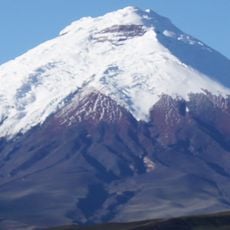
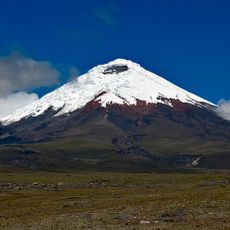
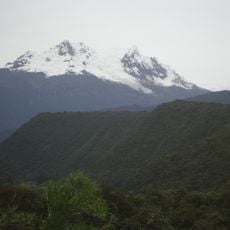
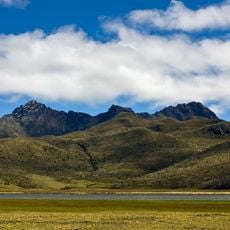
Antisana is an active stratovolcano in the northern Andes of Napo Province, Ecuador, reaching 5,758 meters with a basal edifice 13 kilometers in diameter, slightly elongated east-west. Its upper part is mainly lava, with flows radiating from the summit whose fronts appear beneath the glacier foot. Two edifices are recognized: the old, eroded Antisana I to the east and the young, potentially active Antisana II.
Antisana II, the young potentially active cone, grew during and after the last Pleistocene glaciation and erupted regularly for over 14,000 years, with at least 40 small to moderate eruptions recorded. Activity apparently stopped about 1,000 years ago. Historical eruptions were presumed in 1590-1600, 1760, 1773 and 1802, but the 1760 and 1773 events are now linked to the Chacana caldera, and the 1802 report is only Alexander von Humboldt's account of smoke.
Antisana lies in Napo Province, in Quijos Canton, where it is regarded as the canton's most emblematic natural monument and one of the area's main tourist attractions. The volcano and its surroundings form the Antisana National Park, part of Ecuador's National System of Protected Areas. The summit area is snow-covered year-round, and mountaineers have reported a smell of sulphur on the upper slopes.
Access is usually from the west side via highland tracks that can become impassable during rain. Those heading for the summit need glacier equipment and should travel with an experienced mountain guide.
Meltwater from the glaciers supplies Quito with much of its drinking water, flowing through reservoirs and pipelines into the capital. The protected area around the mountain also safeguards the páramo vegetation, which stores water like a natural sponge.
The community of curious travelers
AroundUs brings together thousands of curated places, local tips, and hidden gems, enriched daily by 92,624 contributors worldwide.