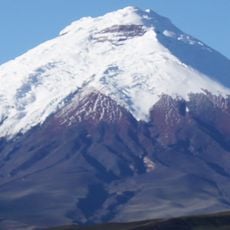
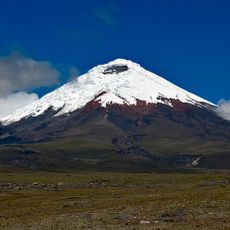
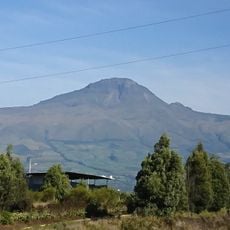
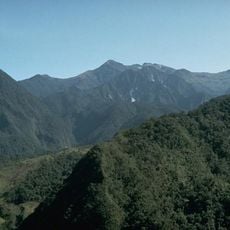
Rumiñahui volcano, Stratovolcano in Cotopaxi National Park, Ecuador.
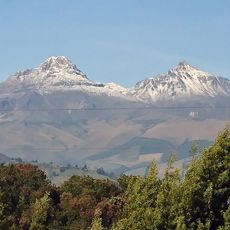
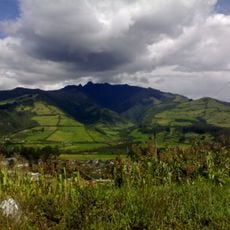
Rumiñahui volcano features three separate summits with steep rocky faces visible from various directions throughout Cotopaxi National Park in the Andes. The mountain displays exposed ridges connecting these peaks and shows the typical conical shape of a stratovolcano built by layers of lava and rock over time.
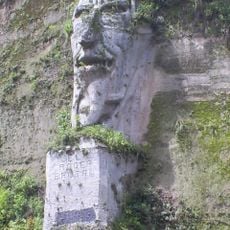
The volcano is named after Rumiñahui, an Inca military leader who resisted the Spanish conquest of Ecuador in the 1530s. The Kichwa name combines rumi (stone) and ñawi (eye or face), giving "stone eye" or "stone face". The mountain stands 40 km south of Quito, overshadowed by its neighbour Cotopaxi.
The name comes from Kichwa: rumi means stone or rock, and ñawi means eye or face, giving "stone eye" or "stone face". The mountain is named after Rumiñahui, an Inca military leader who resisted the Spanish conquest in the 1500s. The Hispanicized spelling Rumiñahui is used in Spanish, pronounced [rumiˈɲawi].
Visitors must obtain a permit at the Cotopaxi National Park entrance before climbing and should start early in the morning to avoid afternoon weather changes. Proper footwear and weather protection are important, as conditions can shift quickly at this altitude.
The name comes from Kichwa rumi (stone) and ñawi (eye or face), giving "stone eye" or "stone face". It refers to the Inca general Rumiñahui, who resisted the Spanish conquest; the volcano stands 40 km south of Quito and is dwarfed by its neighbour Cotopaxi.
The community of curious travelers
AroundUs brings together thousands of curated places, local tips, and hidden gems, enriched daily by 93,004 contributors worldwide.