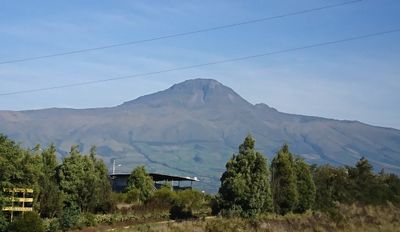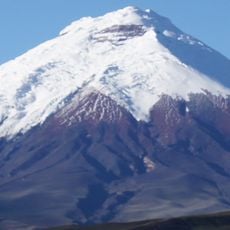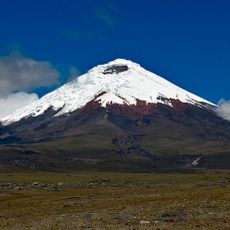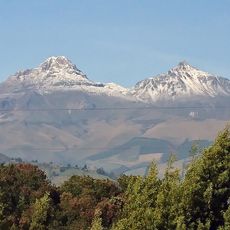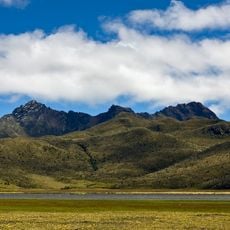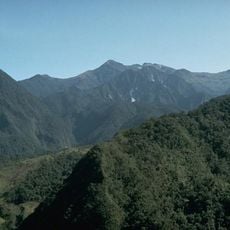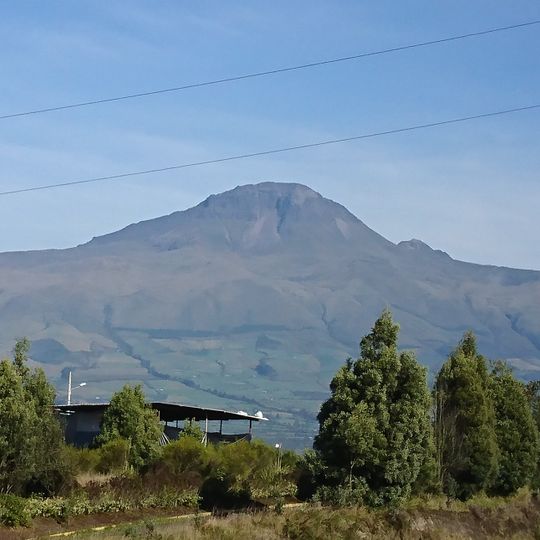
Corazón volcano, Stratovolcano in Pichincha Province, Ecuador.
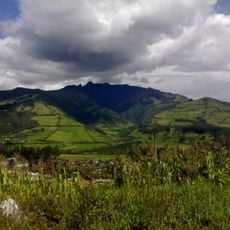
Corazón is an inactive stratovolcano in Pichincha Province, Ecuador, rising to 4,790 meters in the western Andes southwest of Quito. Its slopes are deeply cut by erosion channels that give the mountain a sharply sculpted profile visible from the surrounding valleys.
The volcano last erupted during the Pleistocene epoch and has been dormant ever since. In 1738, French scientists Pierre Bouguer and Charles-Marie de La Condamine made the first recorded ascent as part of their geodesic mission in the Andes.
The volcano takes its name from two deep ravines on its eastern side, Verde and Mortiño, which together form the shape of a heart when seen from above. This natural feature has shaped how local people refer to the mountain and how it is recognized across the region.
Reaching the summit requires mountaineering experience, proper gear, and enough time to acclimatize to the high altitude before attempting the climb. Weather on the slopes can shift quickly, so checking local conditions ahead of time and being ready to adjust plans is strongly advisable.
Unlike many high peaks in the Ecuadorian Andes, Corazón has no permanent ice or glacier cover despite its elevation, largely due to its specific orientation and local wind patterns. This makes it one of the few summits in the area where climbers face rocky terrain rather than glacial conditions.
The community of curious travelers
AroundUs brings together thousands of curated places, local tips, and hidden gems, enriched daily by 91,213 contributors worldwide.