Sucre National Theater, Performance theatre in Plaza del Teatro, Quito, Ecuador
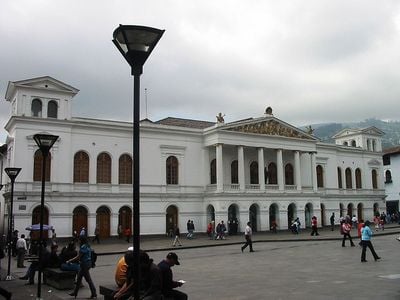
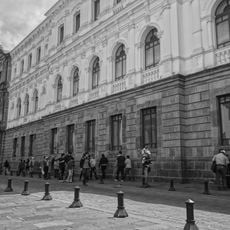
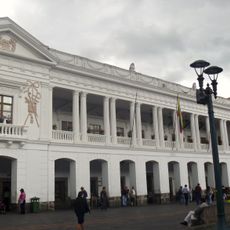
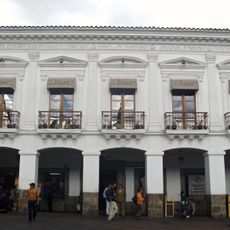
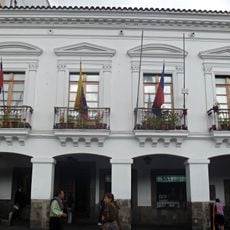
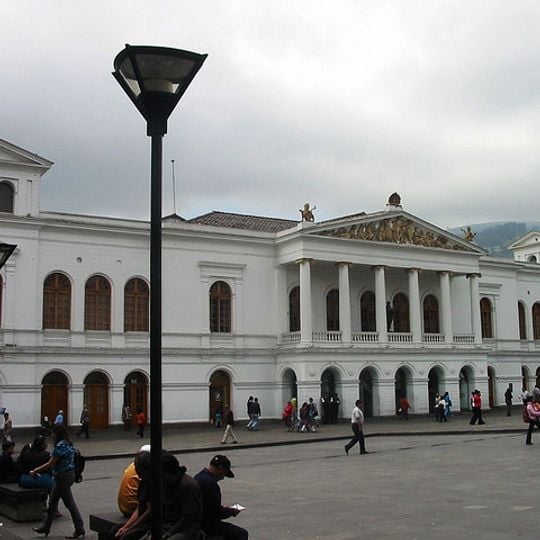
The Sucre National Theater is a neoclassical theatre in Quito with a white facade, a central portico of six Ionic columns, and a triangular pediment with a gilded relief of Apollo and the nine muses. The ground floor has round arches partly reused from the colonial Carnicerías building, and a bronze statue of Marshal Sucre stands in the loggia.
The theatre was built between 1879 and 1887 on the site of the colonial Plaza de las Carnicerías, a former slaughterhouse area, and inaugurated on 25 November 1886 under President José María Plácido Caamaño. It closed for a first reconstruction under Galo Plaza Lasso, completed in 1952, and reopened on 24 November 2003 after a rehabilitation begun in 1994.
The theatre hosts operas, ballets, and concerts featuring both local and international performers who bring their work to this stage. These productions have shaped the city's cultural life for generations and continue to draw audiences.
The theatre faces the Plaza del Teatro, a roughly 3,000-square-metre open square in Quito's historic centre. The main entrance sits behind the six-column portico, and the box seating follows the horseshoe plan of an Italian-style auditorium with room for more than 800 spectators. The Fundación Teatro Nacional Sucre also runs the Café del Teatro and other venues nearby.
The bronze statue in the central loggia was first designed as a monument to Sucre, hero of the Battle of Pichincha, but ended up decorating the theatre instead. It shows the marshal raising a mestizo woman whose chains he has broken, an allegory of Ecuadorian liberty.
The community of curious travelers
AroundUs brings together thousands of curated places, local tips, and hidden gems, enriched daily by 92,784 contributors worldwide.