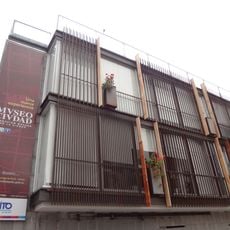
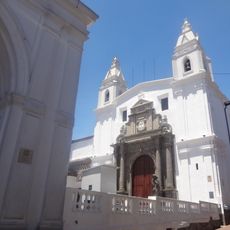
Palacio de la Curia Metropolitana, Religious administrative building in Plaza de la Independencia, Quito, Ecuador.
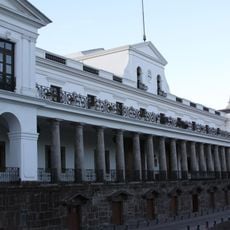
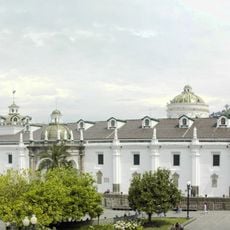
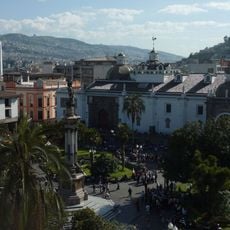
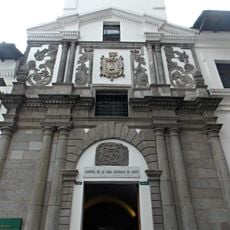
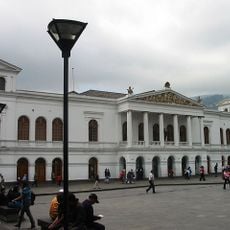
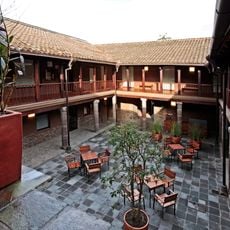
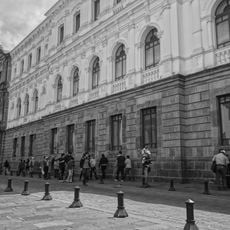
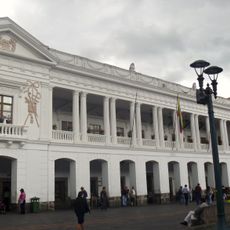
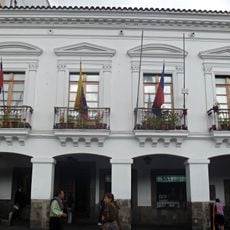
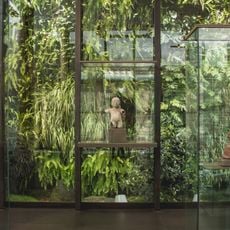
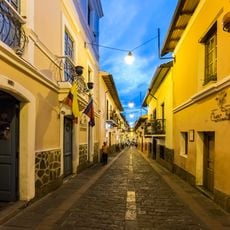
The Palacio de la Curia Metropolitana is a colonial house on the north side of Plaza de la Independencia, between the Casa de los Alcaldes and the Palacio Arzobispal. It has two stone-pillared wooden galleries around two courtyards: the first small, with a stone floor and cow-bone inlays; the second larger, with an andesite stone fountain. Its baroque facade shares a continuous arcade with balconies above.
The lot was assigned in 1534 to one of the founders of San Francisco de Quito; during the 16th and 17th centuries it belonged to the silversmith Pedro Gutiérrez and his descendants, and in the 18th century to Francisco Calvache de Biedma. In the early 19th century the Audiencia judge Moreno de Avendaño lived here, and by mid-century it was bought by Modesto Larrea y Carrión, second Marquis of San José and vice-president of Ecuador from 1832 to 1835. The Quito diocese bought it in the early 20th century for its offices, and in 1998 the city and the Curia agreed to turn it into the Pasaje Arzobispal shopping centre, restructured in 2001-2002.
The palace shows how closely the church and government worked together in Ecuador's history, as it housed the Archdiocese of Quito's administrative offices for many generations. The spaces reveal how religious authority shaped daily city life.
The building now functions as Centro Comercial Pasaje Arzobispal, a shopping and dining destination accessible to visitors. The carefully restored colonial spaces allow guests to explore the original architecture while browsing shops or enjoying meals.
The first courtyard's stone floor incorporates pieces of cow bone, a detail easy to miss. A low corridor with a semicircular stair leads from there to the larger second courtyard, where an andesite stone fountain stands as the focal point.
The community of curious travelers
AroundUs brings together thousands of curated places, local tips, and hidden gems, enriched daily by 93,992 contributors worldwide.