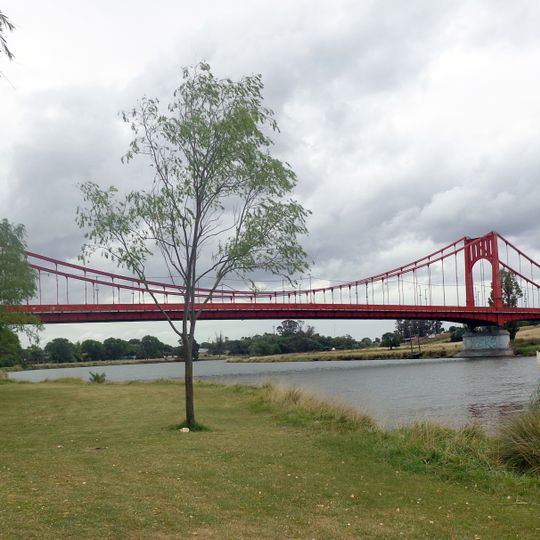
Hipólito Yrigoyen Bridge, Suspension bridge in Necochea, Argentina
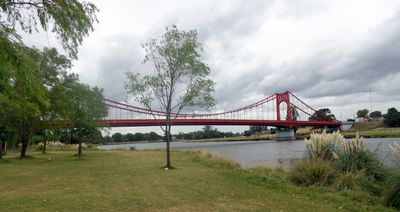
Hipólito Yrigoyen Bridge is a suspension bridge over the Quequén Grande River linking Necochea and Quequén. Its steel deck spans 270 metres in three sections: a central span of 150 metres and two side spans of 60 metres. The deck hangs from 32 cables, each made of 169 steel wires, supported by two steel towers 25.7 metres high. The roadway is six metres wide, with one-metre walkways on each side.
The bridge was inaugurated in 1929 and represented a remarkable technical achievement for its time, as only a handful of comparable structures existed anywhere in the world. This construction marked a turning point for the region and demonstrated Argentina's ability to build modern infrastructure.
Locals call it the Puente Colgante, and its opening on 21 July 1929 was a source of pride because only four bridges of its kind existed worldwide then: one over the Rhine at Cologne and three over the Allegheny in Pittsburgh. It remains a landmark of Necochea and Quequén.
The bridge welcomes cars, motorcycles, bicycles, and pedestrians, with clearly separated spaces for each type of user crossing the river. Keep in mind that the structure is exposed to wind and weather, so dress appropriately when walking across on windy or rainy days.
The steel structure was fabricated in France by Chantier et Atelier de la Gironde, shipped from Cherbourg aboard the Pampa and Bahía Blanca, unloaded at Quequén port and towed 5 km upriver to the site. Each of the 32 cables is made of 169 steel wires wound in concentric layers, alternately right and left.
The community of curious travelers
AroundUs brings together thousands of curated places, local tips, and hidden gems, enriched daily by 92,632 contributors worldwide.