Museo de Ciencias Naturales Gesué Pedro Noseda, Natural sciences museum in Lobería, Argentina
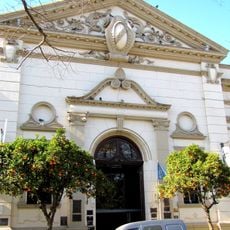
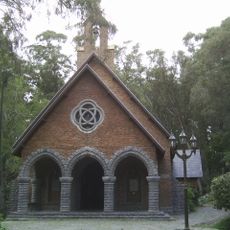
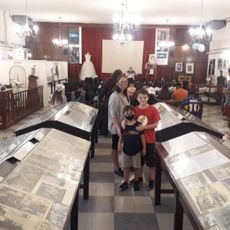
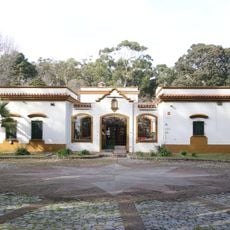
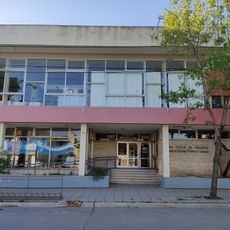
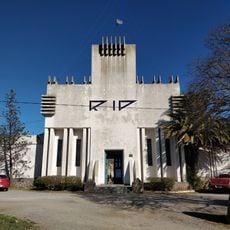
Museo de Ciencias Naturales Gesué Pedro Noseda is a natural sciences museum housed in the Club de Pesca Lobería in Lobería, Buenos Aires Province. Its rooms hold paleontological collections of extinct megafauna that coexisted with humans over 10,000 years ago, archaeological remains of indigenous populations, and taxidermized fauna and current flora recreating Pampean ecosystems.
The museum was founded in 1960 after two fishermen discovered a giant armored shell on the banks of the Quequén Grande River. This discovery led to the creation of an institution that later documented many archaeological sites from the surrounding area.
The museum takes its name from Gesué Pedro Noseda, the club member who led its founding and directed it. He invited researchers from the UNLP, UBA, UNICEN and CONICET to give talks in Lobería and to work at sites he pointed out, and the correspondence and fieldwork that followed tied the institution to national archaeology. In 2006 the municipality declared it Cultural Heritage of the people of Lobería.
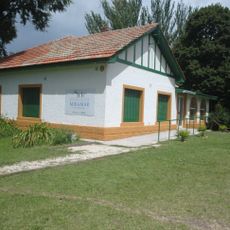
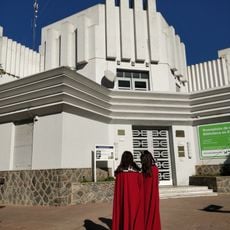
The museum occupies a space within the Club de Pesca Lobería, the fishing club that created it in 1960, in Lobería, Buenos Aires Province. It was officially recognized by the municipal government through decree 396/65 of 13 May 1965. Visitors should confirm opening arrangements with the club before travelling, since the museum operates as part of that institution rather than as a standalone site.
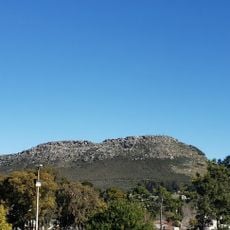
The founding piece was a glyptodont shell found in 1959 by fishermen Efraín Rumi and Francisco García on the banks of the Quequén Grande River. In 1960 Gesué Pedro Noseda found fish-tail projectile points at the top of Cerro El Sombrero, dated to more than 10,000 years AP.
The community of curious travelers
AroundUs brings together thousands of curated places, local tips, and hidden gems, enriched daily by 92,633 contributors worldwide.