Lagoa do Peixe National Park, Nature reserve in Rio Grande do Sul, Brazil.
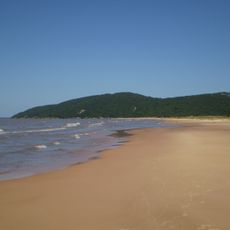
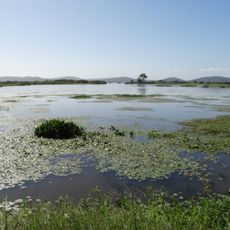
Lagoa do Peixe National Park is a 36,721-hectare protected area in Rio Grande do Sul, Brazil, created by decree nº 93.546 of 6 November 1986 and administered by the Chico Mendes Institute for Biodiversity Conservation. It lies on and between two parallel lines of dunes along the Atlantic coast, 35 kilometres long and on average 1 kilometre wide, with altitudes from sea level to 17 metres. The northern section holds two freshwater lagoons, Veiana and Pai João, while other lagoons and marshes are salt.
The Brazilian government created this protected area in 1986 to preserve vital stopover sites for migratory birds between Patagonia and North America. The park later gained international recognition as part of a shorebird protection network.
Fishermen from the region hold IBAMA fishing licences and harvest pink shrimp (Farfantepenaeus paulensis) from the lagoon during the season, sharing the water with the birds that feed on its fruit. The park's administrative headquarters sits in Mostardas, at Praça Prefeito Luiz Martins, nº 30.
Bird watching is rewarding throughout the year, though certain species are more common during specific seasons. Visitors should prepare for changing weather and bring suitable clothing and binoculars for observing wildlife.
The park's tuco-tuco (Ctenomys flamarioni) is a rodent found only in the coastal dunes of Rio Grande do Sul, and its mounds can be spotted in the sandy fields between the dune lines. The park also holds two freshwater lagoons in its northern section, Veiana and Pai João, while the remaining lagoons and marshes are salt.
The community of curious travelers
AroundUs brings together thousands of curated places, local tips, and hidden gems, enriched daily by 92,779 contributors worldwide.