SESC Pompéia, Cultural and sports complex in Pompeia district, São Paulo, Brazil
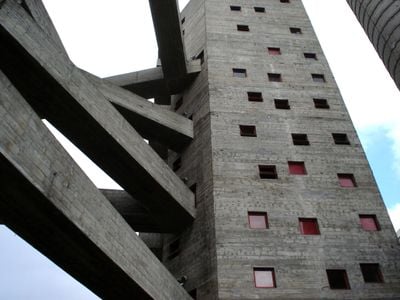
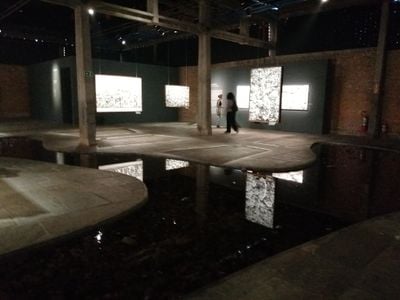
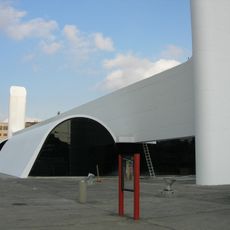
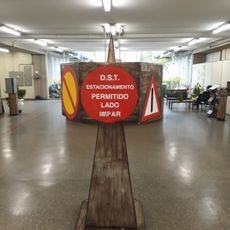
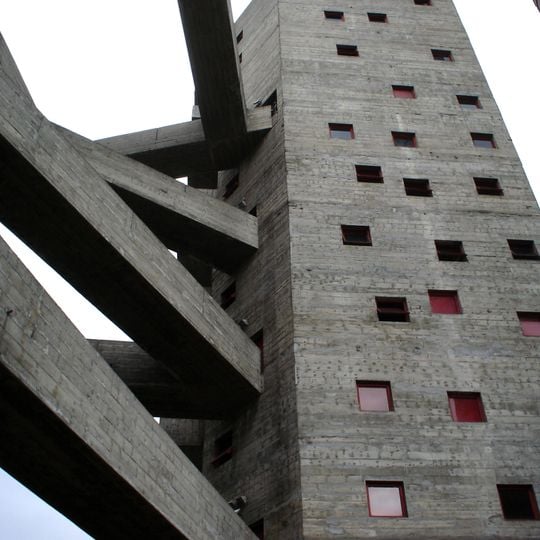
SESC Pompéia is a cultural and sports center in the Vila Pompéia neighborhood of São Paulo, converted from the Fábrica da Pompeia factory by Lina Bo Bardi. Two grey concrete towers with horizontal board marks and grids of small red-framed windows stand at the back, linked by eight pedestrian walkways and crossed by thick diagonal beams. Inside, a dim hall of square concrete columns and beams holds five backlit panels hung on cables above a floor opening onto dark water.
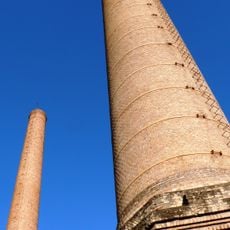
Italian architect Lina Bo Bardi redesigned the former factory building from 1977 to 1986, preserving the original brick structure while introducing modern concrete elements. This transformation blended industrial heritage with contemporary design to create a public cultural space.
The name Pompeia comes from the working-class neighbourhood that grew around the Fábrica da Pompeia, opened in 1938 by the German firm Mauser & Cia. When SESC opened the site on 22 January 1982, São Paulo punk bands Inocentes, Ratos de Porão, Cólera and Olho Seco played. The theatre seats are of raw wood, left unupholstered so spectators stay awake and focused.
The complex sits near the Palmeiras-Barra Funda intermodal terminal, and a future Metro Line 6 station, Sesc-Pompeia, is planned nearby. Inside, the two sports towers are joined by eight pedestrian walkways, so reaching the courts and pool means crossing between them on foot. The theater's wooden seats are unupholstered and closely spaced, which the venue says keeps spectators alert.
The two concrete sports towers are joined by eight pedestrian walkways, built over a strip of land that could not be constructed on. Lina Bo Bardi grouped the courts and changing rooms in the towers for that reason. The tower windows are round, globular openings, not irregular slits.
The community of curious travelers
AroundUs brings together thousands of curated places, local tips, and hidden gems, enriched daily by 92,783 contributors worldwide.