Vista Chinesa, Scenic viewpoint in Alto da Boa Vista, Brazil
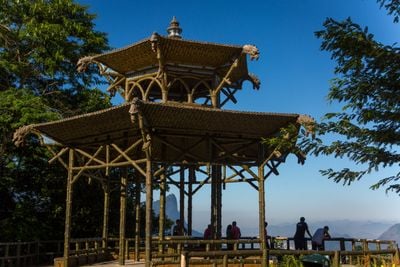
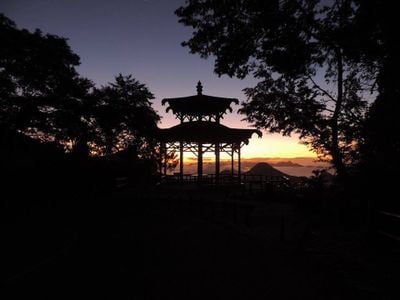
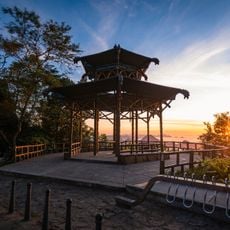
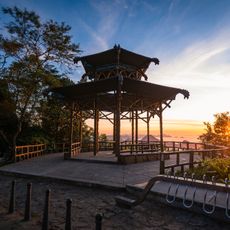
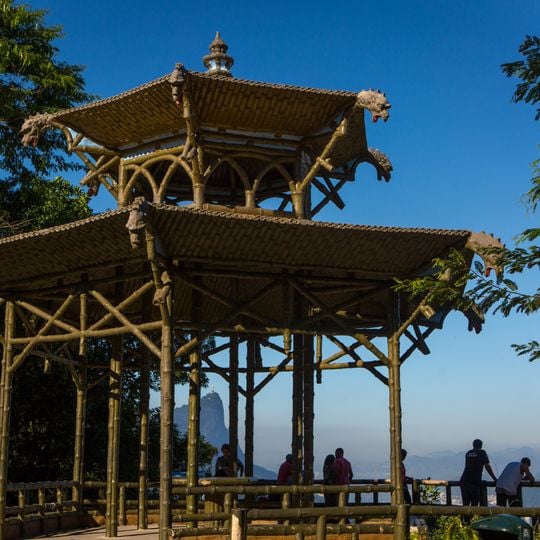
Vista Chinesa is a Chinese-style pavilion set at 380 meters elevation that opens up views across Rio's south zone, Guanabara Bay, and the Tijuca Forest. The structure combines bamboo and concrete in a design that fits naturally into the surrounding mountain landscape.
The pavilion was built in 1903 under mayor Pereira Passos, to a design by architect Luis Rei, in mortar imitating bamboo. Its name recalls the Chinese tea planters brought to Rio from Macau in the early 19th century, first under Dom João VI, who planted some 6,000 tea bushes on the slopes behind the Botanical Garden. The road below, opened from 1856 under the Baron of Bom Retiro with works contracted to Thomas Cochrane, employed Chinese labourers from Macau.
The name comes from Chinese tea planters brought to Rio in two waves in the early 19th century, first about 1812 under Dom João VI. They planted some 6,000 tea bushes on the slopes behind the Botanical Garden. The pavilion, built in mortar imitating bamboo, recalls that community; a 1844 map already marked a "Casa dos Chinas" nearby.
The pavilion stands at the 380 m summit of Morro da Vista Chinesa, where Estrada da Vista Chinesa meets Estrada Dona Castorina. The road climbs from the Jardim Botânico side through Tijuca National Park and passes the Mesa do Imperador viewpoint just below. Views take in the Botanical Garden, the Municipal Park and a long stretch of the south coast.
The pavilion is built of mortar shaped to imitate bamboo, designed by architect Luis Rei under mayor Pereira Passos in 1903. Look closely at the posts and diagonal braces: the bamboo joints are modelled, not real canes.
The community of curious travelers
AroundUs brings together thousands of curated places, local tips, and hidden gems, enriched daily by 92,787 contributors worldwide.