Santa Luzia Lighthouse, Maritime lighthouse in Vila Velha, Brazil
Santa Luzia Lighthouse sits on the coast near Vila Velha and rises about 14 meters into the air. Its white light flashes regularly to help guide ships through the waters nearby.
Designed by engineer Zózimo Barroso, the lighthouse's cast-iron sections were made in Glasgow in 1870 by P. & W. MacLellan Ltd. for João Maurício Wanderley, Baron of Cotegipe. The parts landed on Santa Luzia beach and assembly was completed in 1871 under Emperor Dom Pedro II. The site at the foot of Morro do Moreno guided ships into Vitória bay; the land was donated to the Union in 1913 and passed to the Brazilian Navy in 1985.
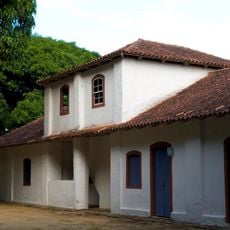
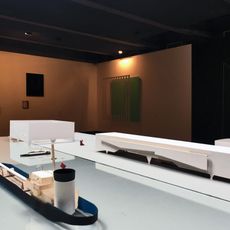
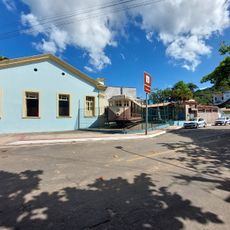
The lighthouse is a national historic monument and a symbol of Vila Velha. Its name comes from the Ponta de Santa Luzia, the eastern tip of the municipality where it stands at the foot of Morro do Moreno. The keepers' compound includes three houses, one still occupied by a lighthouse keeper, and the site holds a permanent exhibition of knots, a memory room and a tourist information centre showing local handicrafts.
Visits run Tuesday to Sunday, roughly 9:00 to 16:30, last about 25 minutes and are free, with entry capped by a maximum number of people. Access is restricted to the exterior area of the lighthouse, a security zone, and visitors are received by military staff, employees and interns.
The lighthouse carries a Racon radar beacon that transmits the letter M in Morse code, helping vessels identify it on radar. Its Fresnel fourth-order lens, 500 mm wide with four focal points, was made by the French firm Barbier, Benard, et Turenne. A keeper still lives in one of the three houses of the small military residential compound beside the tower.
The community of curious travelers
AroundUs brings together thousands of curated places, local tips, and hidden gems, enriched daily by 93,009 contributors worldwide.