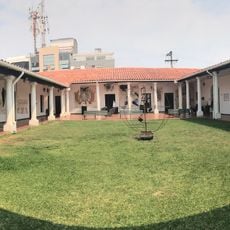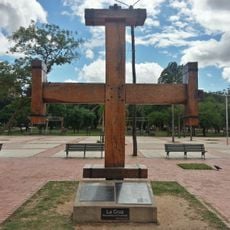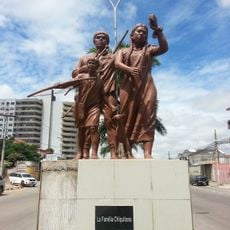
Jesuit Missions of Chiquitos, Religious missions in Santa Cruz Department, Bolivia.
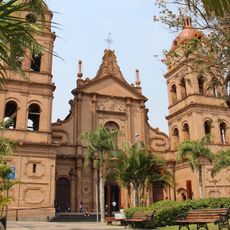
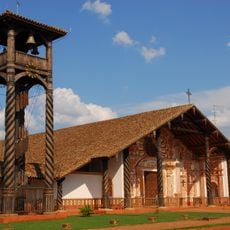
The Jesuit Missions of Chiquitos are six churches built from timber in eastern Bolivia during the 17th and 18th centuries. Each combines baroque architectural forms from Europe with construction methods and decoration created by indigenous craftspeople who were central to the building process.
Dispatched by the Spanish Crown, Jesuits founded eleven settlements over 76 years in the remote Chiquitania, then known as Chiquitos, on the frontier of Spanish America. After the order's expulsion from Spanish territories in 1767, most Jesuit reductions in South America were abandoned and fell into ruins, but these settlements and their culture survived largely intact.
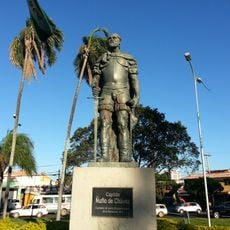
The name Chiquitos comes from the small doors of the straw houses where the indigenous population lived, as noted by conquistador Ñuflo de Chávez. Indigenous inhabitants were taught European music as a means of conversion, and this musical practice continues today. The biennial International Festival of Renaissance and American Baroque Music, organised by Asociación Pro Arte y Cultura, is held in the mission towns.
The churches are spread across several towns that are accessible on foot or by local transport. Guided visits allow you to explore each location and learn about the building methods, architectural features, and daily operations of the communities living there.
The churches' survival owes much to Swiss architect Hans Roth, a former Jesuit who arrived in 1972 and began restoring the missionary churches. San Ignacio de Velasco is excluded from the World Heritage listing because its church is a reconstruction rather than a restoration.
The community of curious travelers
AroundUs brings together thousands of curated places, local tips, and hidden gems, enriched daily by 92,965 contributors worldwide.