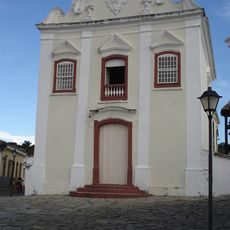
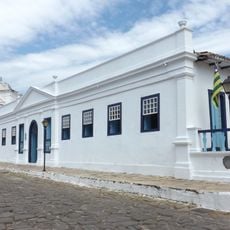
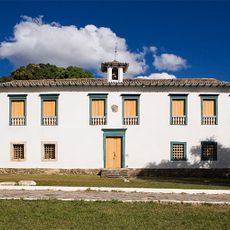
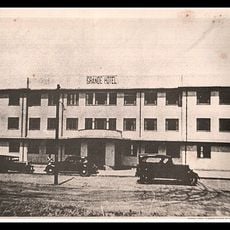
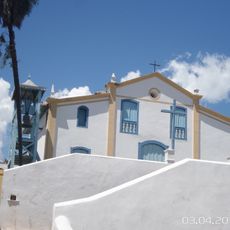
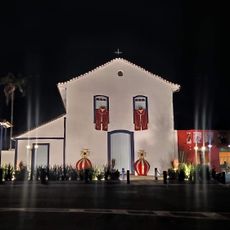
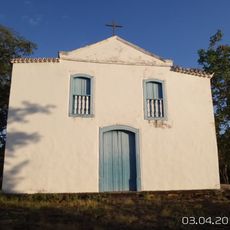
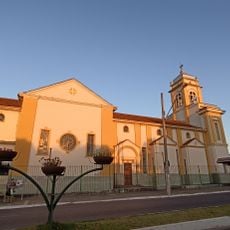
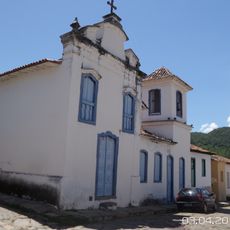
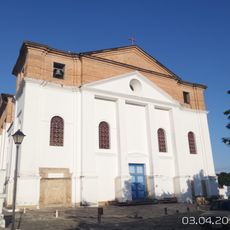
Church of Our Lady of the Good Death, Baroque church in Goiás, Brazil.
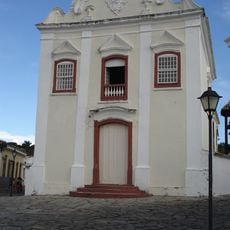
The Church of Our Lady of the Good Death is a baroque building with octagonal form, clay tile roofs, and exterior walls decorated with floral motifs and curving details. Inside, exhibition rooms display a substantial collection of religious objects spanning multiple centuries.
Construction began on the initiative of military men, but a royal prohibition barred them from owning the church, so they donated it to the Irmandade dos Homens Pardos, which completed the work in 1779. A 1921 fire destroyed the main altar, the sacristy and many images by sculptor Veiga Valle. In 2001 the church was included in the UNESCO World Heritage listing of Goiás's historic centre.
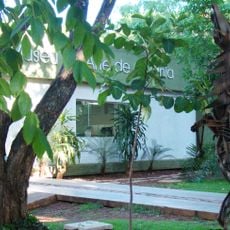
The church houses a Sacred Art Museum where visitors encounter silverware, furniture, sculptures, and paintings accumulated over centuries. This collection reveals how religious artworks were treasured and preserved across generations.
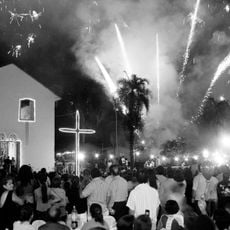
The church stands in the historic centre of Goiás, part of the UNESCO World Heritage listing since 2001. The Sacred Art Museum occupies the church building itself, so the visit combines the baroque interior with the collection of 18th- and 19th-century crowns, chalices, candlesticks and censers. On Holy Wednesday the building is the starting point of the Procissão do Fogaréu, when the surrounding streets fill long before the procession sets off.
The church is the starting point of the Procissão do Fogaréu, held on Holy Wednesday, when masked figures called farricocos parade through the streets of Goiás. The building was inscribed as part of the Historic Centre of Goiás on the UNESCO World Heritage List in 2001.
The community of curious travelers
AroundUs brings together thousands of curated places, local tips, and hidden gems, enriched daily by 92,816 contributors worldwide.