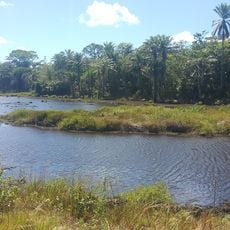
Lagoa do Abaeté, Artificial pond in Itapuã district, Salvador, Brazil.
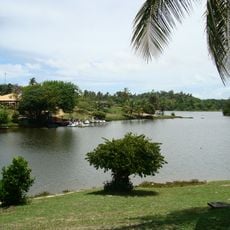
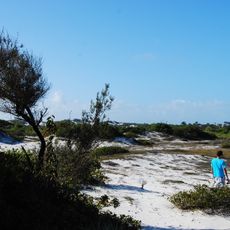
Lagoa do Abaeté is an artificial pond with dark waters surrounded by white sand dunes and native vegetation in the Itapuã neighborhood. The water appears almost black, creating a striking contrast against the bright sand and plants that frame its edges.
The lagoon was revered as sacred by Candomblé followers and was long used by washerwomen on its shores. In the late 1970s, improved access to the north and the building of Salvador's international airport brought housing developments and irregular occupations, and sand was removed illegally for construction. To stop this, the Parque Metropolitano Lagoas e Dunas do Abaeté was created on 3 September 1993.
The name Abaeté comes from Tupi: awa-eté, "true man" or "honest person", though another reading, abaîté, means "terrible man" and ties to the pond's haunted reputation. Dorival Caymmi's song about the lagoon has a washerwoman crossing herself at dawn because she hears the batucajé drums. Washerwomen once washed clothes on the banks, and their association still has a headquarters in the park's urbanized centre.
You can reach the pond by taxi or ride-sharing service from Salvador's center, with the main entrance on Ladeira Ibiama street. Arriving early in the day gives you better light and fewer crowds to enjoy the area.
The pond's freshwater comes from springs rising among the dunes, not from trapped rainwater as was once believed. Dorival Caymmi's song about the lagoon has a washerwoman crossing herself at dawn because she hears the sound of the batucajé, a secular drum dance.
The community of curious travelers
AroundUs brings together thousands of curated places, local tips, and hidden gems, enriched daily by 92,865 contributors worldwide.