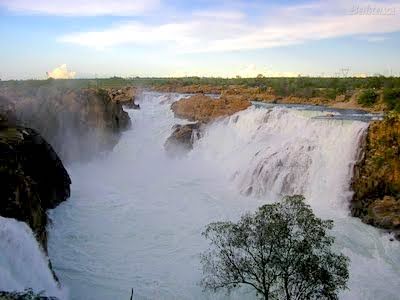
Paulo Afonso Falls, Waterfall cascade in Paulo Afonso, Brazil
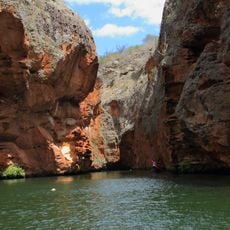
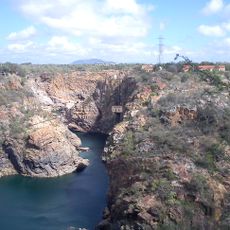
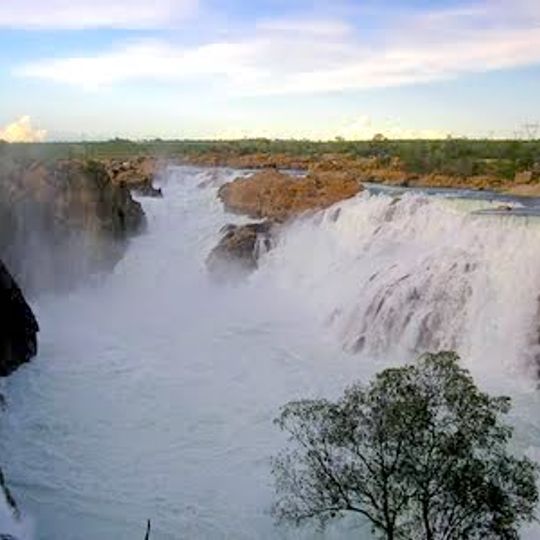
Paulo Afonso Falls consists of a series of water drops along the São Francisco River, descending approximately 80 meters over rocky terrain. The cascade is divided into multiple sections by different levels of rock formations throughout this stretch of the river.
The site gained national attention in 1852 when Emperor Dom Pedro II visited. This visit marked the beginning of growing recognition for this natural formation in northeastern Brazil.
The falls appear in a 1649 oil on wood by Dutch landscape painter Frans Post, titled Cachoeira de Paulo Afonso. In 1875 Marc Ferrez photographed them, and Castro Alves wrote the poem A Cachoeira de Paulo Afonso, part of Os Escravos, published posthumously in 1876, using the water's violence to mirror slavery.
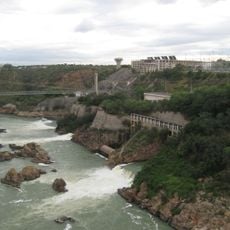
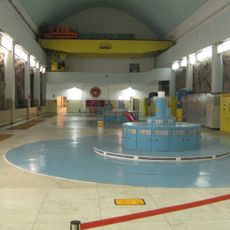
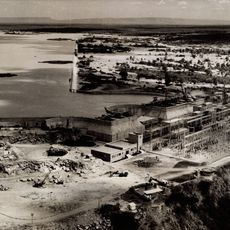
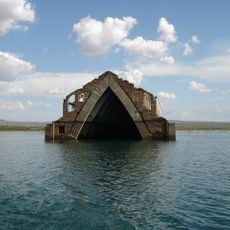
The falls lie on the São Francisco River beside the city of Paulo Afonso, next to Delmiro Gouveia in Alagoas. Since the Paulo Afonso Hydroelectric Complex was built from 1948, the falls mostly run as a spillway in high-rainfall years, so the volume of water varies greatly with the river's flow. The Angiquinho plant, inaugurated in 1913, stands upstream.
Before the dams, the falls carried an estimated 2,832 m³/s, with maximum flows of at least 14,158 m³/s, which would have made them Brazil's largest. Since the Paulo Afonso Hydroelectric Complex was completed, the falls act as a natural spillway in high-rainfall years. The Dutch painter Frans Post depicted them in 1649, and Marc Ferrez photographed them in 1875.
The community of curious travelers
AroundUs brings together thousands of curated places, local tips, and hidden gems, enriched daily by 92,974 contributors worldwide.