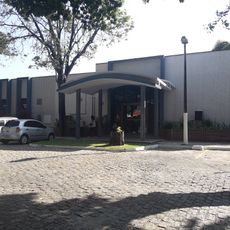
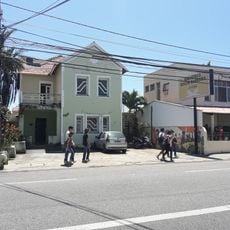
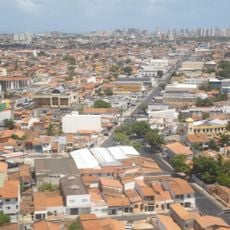
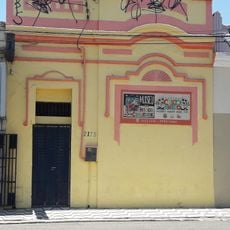
Messejana, Residential district in southeast Fortaleza, Brazil
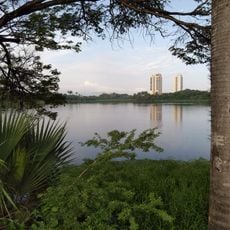
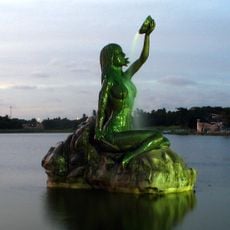
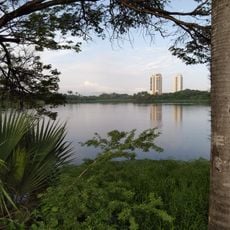
Messejana is a neighbourhood in the south of Fortaleza, Ceará, Brazil, centred on the Lagoa da Messejana. In the lagoon stands a glossy green fibreglass statue of Iracema, the character from José de Alencar's novel: a seated woman with her right arm raised, pouring a thin jet of water from a small vessel. The figure rests on a lumpy sculpted rock base rising from the water.
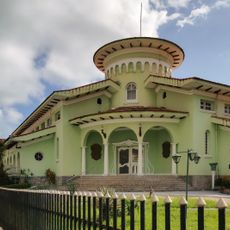
Potiguara people lived here before Portuguese colonization; in 1600 the navigator Jan Baptist Siyns was received by them. Jesuits built the first chapel, elevated to a parish on 1 October 1871, and its site underlies the Igreja Matriz de Nossa Senhora da Conceição. On 1 January 1760, after the Jesuits' expulsion in 1759, the Vila Nova de Messejana da América was founded. In 1921 governor Justiniano de Serpa reduced the municipality to a district of Fortaleza.
Messejana's name probably comes from a centuries-old parish in Portugal, though José de Alencar in Iracema derived it from Tupi "Mocejana", and Fortaleza's city hall traces it to the Arabic "mosjana", meaning prison. The Feira de Messejana runs every day, with Saturday and Sunday as its main days, and a smaller fair gathers around the Mercado Central midweek.
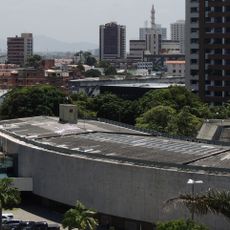
The area has several hospitals and clinics offering different types of medical services. Visitors should be aware that certain streets can become congested during peak hours.
The Feira de Messejana runs every day, not weekly, with Saturday and Sunday as its main days; midweek a smaller fair gathers around the Mercado Central. It is one of the largest fairs in Fortaleza.
The community of curious travelers
AroundUs brings together thousands of curated places, local tips, and hidden gems, enriched daily by 94,049 contributors worldwide.