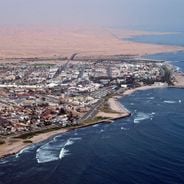
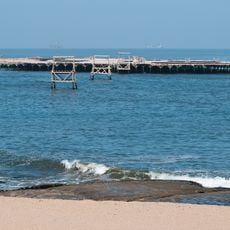
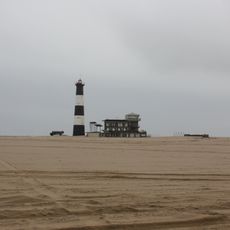
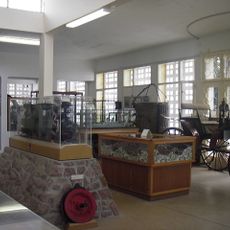
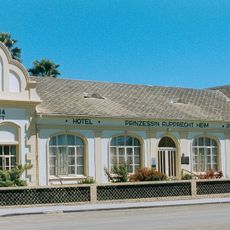
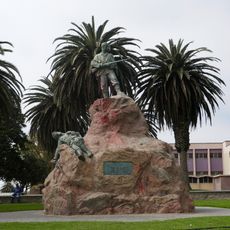
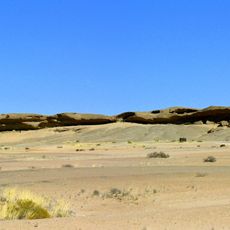
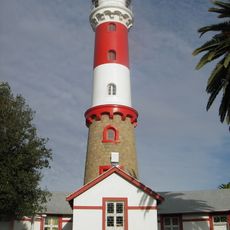
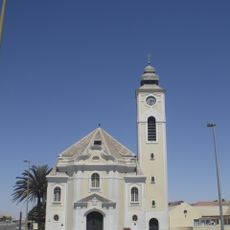
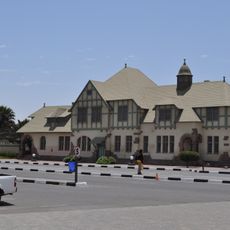
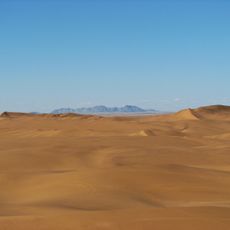
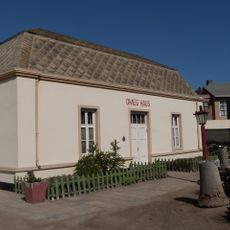
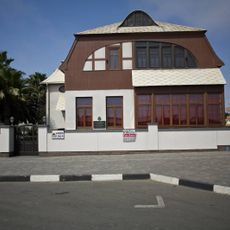
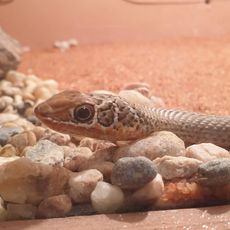
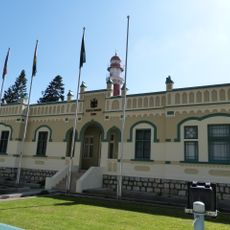
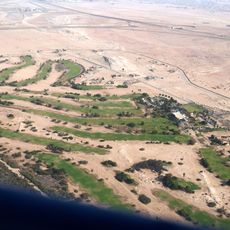
Sandwich Harbour, Ramsar site and coastal area near Walvis Bay, Namibia.
Sandwich Harbour is a bay opening north, about 4.2 km long and 4 km wide, with a shallow lagoon to its south separated from the sea by beach ridges, swales and saltpans. The lagoon, roughly 3.7 km long and 1 km wide, holds brackish water that seeps under the Namib dunes and feeds reed beds at its edge.
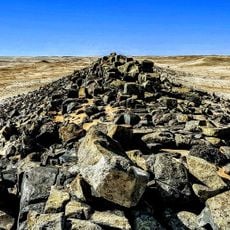
Portuguese navigators established a harbour here in 1486, marked by a stone padrão cross set about 20 km to the north. The Royal Navy surveyed the coast in the 1880s but judged it inferior to Walvis Bay, so sealing vessels and seasonal snoek fishermen used it only as an anchorage. In 1889 it briefly served as a supply port for German South West Africa, with a fishery and a slaughterhouse, until Swakopmund took over its role in 1893.
The name may come from the English whaling ship Sandwich, active here in the 1780s, or from the German "sandfische", a shark found in the area. Afrikaans speakers call it Sandvisbaai, and German records use Sandfischhafen. Seasonal fishermen catching snoek (Thyrsites atun) once anchored in the bay and set up temporary camps.
Access to the site requires advance permits from local authorities before visiting. Planning ahead and checking conditions is essential, as access can be limited and visitor numbers are controlled.
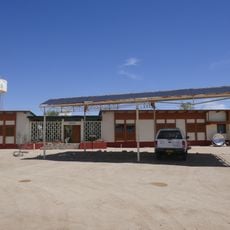
In the 1930s a guano island was built in the lagoon with sand pumps imported from the Netherlands; jackals crossed at low tide and drove the birds off, and only the manager's house remains. Counts between 1990 and 2015 recorded 8,900–9,500 greater flamingos and 2,800–3,900 lesser flamingos among up to 400,000 birds.
The community of curious travelers
AroundUs brings together thousands of curated places, local tips, and hidden gems, enriched daily by 92,923 contributors worldwide.