Tokai Arboretum, Protected arboretum on Constantiaberg slopes in Cape Town, South Africa.
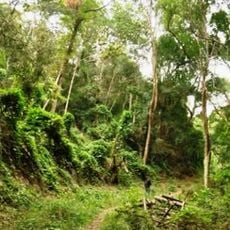
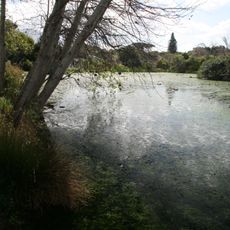
The Tokai Arboretum is a 14-hectare tree collection in Tokai Park, Cape Town, with adjacent compartments extending it to 26 hectares. It was laid out without a silvicultural plan, so it lacks open vistas, lawns and flower beds. Its stands include karri, scribbly gum, jarrah, redwoods, Aleppo pines and stone pines, and about 28 trees have record heights for South Africa.
The arboretum was founded in 1885 by Joseph Storr Lister as one of the first large experimental forestry sites in the Cape Colony. The site became an important place for studying and preserving tree species in the region.
The Gondwana Garden, added in the 1990s, displays plants typical of the Cape about 100 million years ago. The arboretum itself grew from plantings begun in 1694, when Simon van der Stel established English oaks at Tokai. Its trees were set out without a silvicultural plan, so there are no vistas, lawns or flower beds.
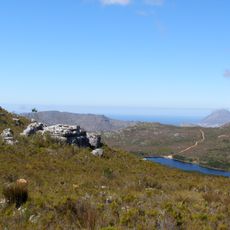
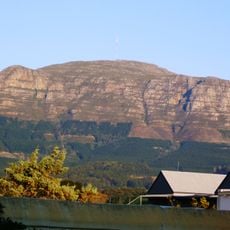
The main Arboretum covers 14 ha at Tokai Park, with adjacent compartments bringing the total to 26 ha. Roads through the main Arboretum are generally in poor condition, and invasive wattle, blackwood and grasses are being continuously cleared, so expect rough surfaces. The site lies on the Cape Flats below Constantiaberg; enter from Tokai Main Road and allow time to walk between stands.
About 28 trees in the main arboretum hold record heights for South Africa, among them karri, jarrah and stone pines. The stone pines were already present in a small copse before the 1886 planting of 150 species.
The community of curious travelers
AroundUs brings together thousands of curated places, local tips, and hidden gems, enriched daily by 93,014 contributors worldwide.