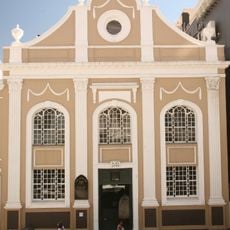
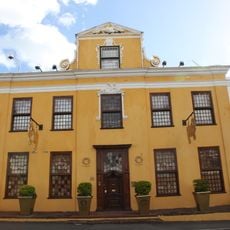
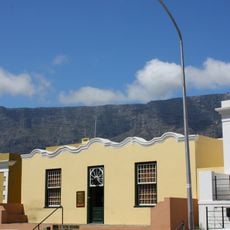
Dutch Cape Colony, Dutch colonial settlement at Cape of Good Hope, South Africa
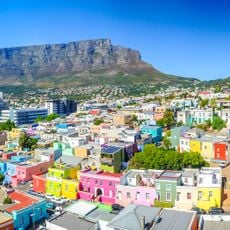
The Dutch Cape Colony was a settlement in southwestern South Africa that extended from Table Mountain to False Bay and later pushed inland toward the Hottentots Holland mountain range. The main settlement sat at the foot of Table Mountain, where a fort, hospital, warehouses, and gardens were built to supply passing ships with provisions.
The Dutch East India Company sent Jan van Riebeeck in 1652 to set up a refreshment station at the Cape, where ships traveling to and from Batavia would collect fresh water and food. After several decades, the company's control expanded beyond the coast as cattle farmers moved deeper into the interior.
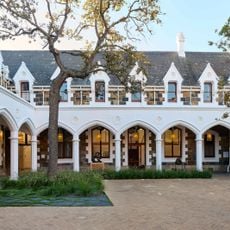
The Dutch East India Company granted land to settlers in the Cape, where they planted vineyards and cultivated wheat, while craftsmen and sailors lived in simple houses along what is now Adderley Street. On the slopes of Table Mountain, wine estates with whitewashed buildings in Cape Dutch style developed, and these can still be seen today in Constantia and Stellenbosch.
Today, the Castle of Good Hope in central Cape Town and the Company's Garden, where vegetables and fruit were first grown for ships, recall this period. Many of the original wine estates in Constantia and Stellenbosch offer tours and show the architecture and way of life from the colonial period.
The Company's Garden at the foot of Table Mountain was one of the first botanical testing grounds outside Europe and brought together plant species from Asia and other parts of Africa. This garden became the foundation for experiments in wine and fruit cultivation that shaped South Africa's modern agricultural industry.
The community of curious travelers
AroundUs brings together thousands of curated places, local tips, and hidden gems, enriched daily by 90,748 contributors worldwide.