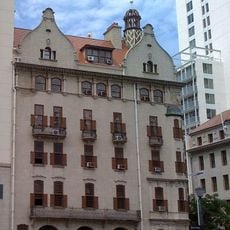
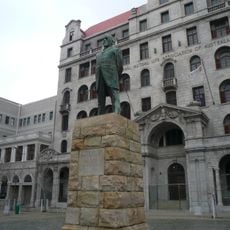
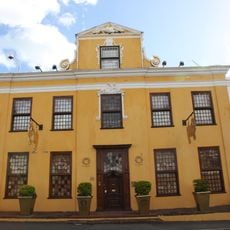
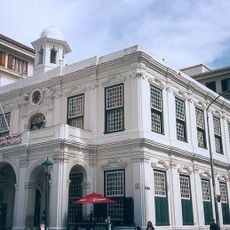
Koopmans-de Wet House, Historical house museum in Strand Street, Cape Town, South Africa.
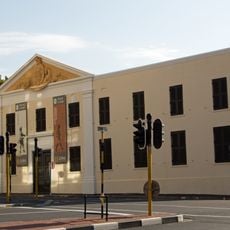
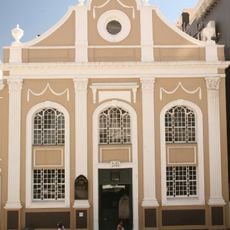
Koopmans-de Wet House is a residential museum in a historic villa with characteristic Cape Dutch style, built in brick with a distinctive gabled roof. Inside are 18th century furnishings and a collection of fine porcelain that belonged to the former residents.
The house was built in 1701 by Reijnier Smedinga, a silversmith and assayer for the Dutch East India Company, on erf 8 of Block J. Pieter Malet, owner from 1771 to 1793, added the current façade and upper storeys to both rear wings. Marie Koopmans-de Wet and her sister Margaretha turned it into a salon and a transit point for supplies for Boer prisoners of war during the South African War. It opened as a museum on 10 March 1914.
The house takes its name from Marie de Wet, born in it on 18 March 1834, who married Johan Koopmans in 1864. After his death in 1880 she and her sister Margaretha turned the rooms into a salon and a transit point for supplies donated to Boer prisoners of war during the South African War.
The house stands on Strand Street, one of Cape Town's oldest and widest streets, in the block bounded by Long, Castle and Burg streets. It is run as a branch of the Iziko museums. The building was altered over the centuries, so look for the rear slave quarters built over a coach-house and the upper storeys added to both rear wings.
The collection includes a rare porcelain set brought from abroad that showcases the wealth and taste preferences of the historical residents. Such imported goods were a visible marker of status and refinement during that period.
The community of curious travelers
AroundUs brings together thousands of curated places, local tips, and hidden gems, enriched daily by 92,892 contributors worldwide.