South African Sendinggestig Museum, Historical museum and religious building in Long Street, Cape Town, South Africa
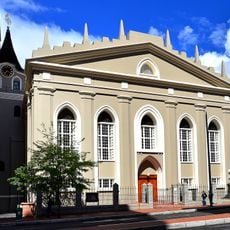
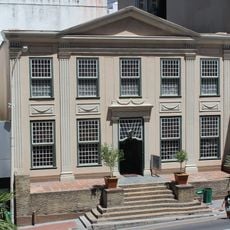
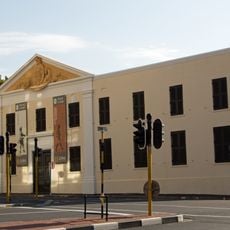
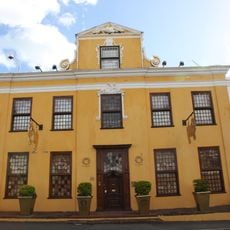
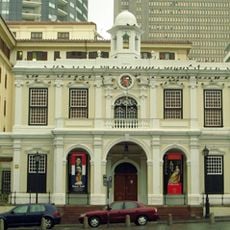
The South African Sendinggestig Museum occupies the country's oldest indigenous mission church, built 1801–1804 on Long Street. Its facade has Corinthian pilasters, a moulded cornice and a gable with a circular ventilator and four urns. The interior is a basilica plan with an apse, and the steeply pitched roof is the only surviving lime-concrete example of its kind.
The South African Society for the Advancement of Christ's Kingdom bought the Long Street property in 1801 for 50,000 guilders; slaves and free blacks demolished the existing house and built the new walls from Vlaeberg quarry stone and bricks they made. The Sendinggestig was inaugurated on 15 March 1804 by Rev. J.P. Serumer of the Groote Kerk. It became a full congregation in 1820, when Jacobus Henricus Beck was its first minister and Domingo, Job, Arend and Durenda were the first baptised.
The building's name comes from its early role: it was a "gestig" or meeting house for prayer meetings, Bible studies and literacy classes, not a church. From 1813 enslaved children were taught to read and write there on Wednesdays and Fridays, and adult slaves could attend an evening school from July 1813 if their owners allowed it.
The building on Long Street is easily accessible on foot with no entrance fee required. Visiting on weekdays offers a quieter experience for exploring the exhibition at your own pace.
The floor features star patterns commemorating slavery's abolition in 1834, while front pews display names of the first baptized enslaved individuals. These design elements turn the space into a place of personal remembrance.
The community of curious travelers
AroundUs brings together thousands of curated places, local tips, and hidden gems, enriched daily by 94,081 contributors worldwide.