Hydrogen Epoch of Reionization Array, Radio telescope facility in Karoo region, South Africa
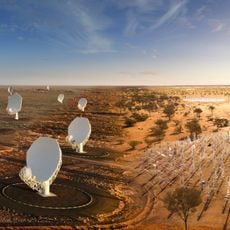
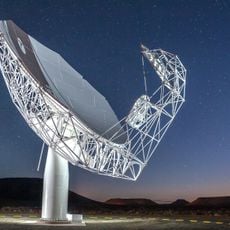
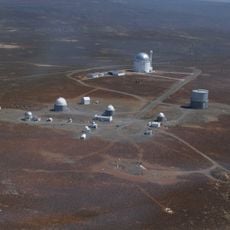
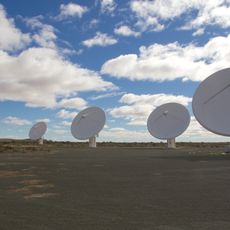
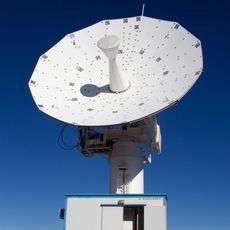
The Hydrogen Epoch of Reionization Array (HERA) is a radio interferometer of 350 fixed antennas, each a cross-dipole feed above a 14-metre wire-mesh parabolic dish. 318 sit in a hexagonal core 300 metres across; 32 outriggers lie farther out. Built from wood and PVC pipes, the antennas point at the zenith and together collect 54,000 m².
HERA was conceived as a Square Kilometre Array precursor, led by principal investigator Aaron Parsons, to detect redshifted 21 cm hydrogen emission from the epoch of reionization. It follows earlier instruments such as PAPER, LOFAR and the Murchison Widefield Array, which first searched for this signal. HERA is one of four SKA precursors, alongside MeerKAT, ASKAP and the MWA.
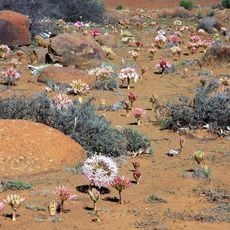
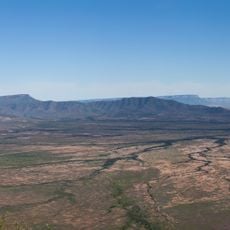
HERA is one of four precursor telescopes to the Square Kilometre Array, alongside MeerKAT in South Africa and ASKAP and the Murchison Widefield Array in Western Australia. Its principal investigator is Aaron Parsons, and it is built in the Karoo near Carnarvon, a sparsely populated site chosen to keep FM radio and television signals away from the 50–250 MHz band.
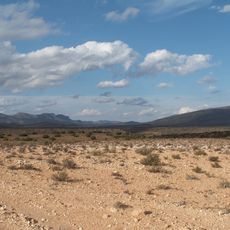
HERA is not open to visitors; it stands in the sparsely populated Karoo desert near Carnarvon, chosen to keep FM radio and television signals away from the 50–250 MHz band. Observations are limited to night hours and avoid the Milky Way's plane, leaving an annual science window of about four months. The 318 antennas of the core sit within a 300-metre hexagon, with 32 outriggers farther out.
Each antenna is a cross-dipole feed suspended over a 14-metre wire-mesh parabolic dish, built from wood and PVC pipes. The dish size was chosen so that standing waves inside the structure fall below 50 MHz, outside the 50–250 MHz band HERA observes.
The community of curious travelers
AroundUs brings together thousands of curated places, local tips, and hidden gems, enriched daily by 94,303 contributors worldwide.