Nelson Bay Cave, Stone Age archaeological site in Robberg Nature Reserve, South Africa.
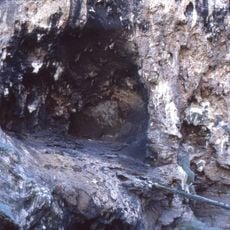
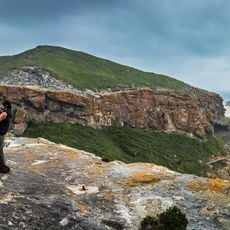
Nelson Bay Cave is a prehistoric site on Robberg Peninsula that opens roughly 20 meters above sea level. The cave entrance is wide enough to accommodate groups and extends back into the cliff face with considerable depth.
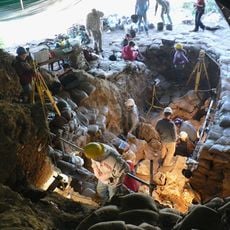
Researchers excavated this site between 1964 and 1971 and found evidence of human occupation extending more than 100,000 years into the past. Inhabitants abandoned the cave during the coldest phase of the last ice age.
The cave's name comes from the Nelson Bay path leading up to it; earlier unpublished documents called it Wagenaar's Cave. Excavations in the 1960s and 1970s yielded pottery, sheep remains, ochre fragments and shell ornaments, and the site gives its name to the Robberg Later Stone Age Industry, a reference point for other Stone Age sites.
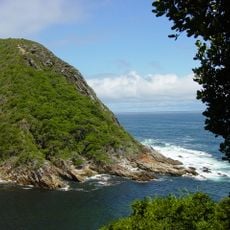
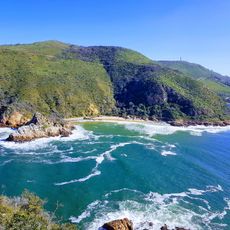
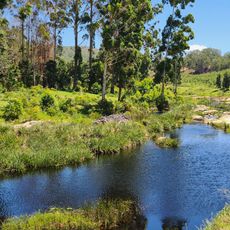
The cave sits on the south-facing slope of the Robberg Peninsula, reached by the path officially named Nelson Bay, from which the site takes its name. The opening lies 21 metres above mean sea level, so the final approach climbs the cliff slope. The surrounding Table Mountain Group soils are sandy and low in pH, and the coastal weather changes quickly.
Archaeological excavations uncovered burials with skeletons positioned in curled postures and adorned with shells and ochre pigment. These discoveries provide rare insight into how prehistoric people treated their dead.
The community of curious travelers
AroundUs brings together thousands of curated places, local tips, and hidden gems, enriched daily by 94,797 contributors worldwide.