Tsitsikamma National Park, National park in Eastern Cape, South Africa
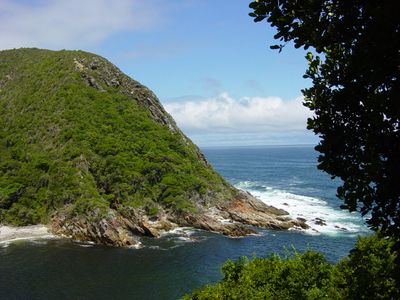
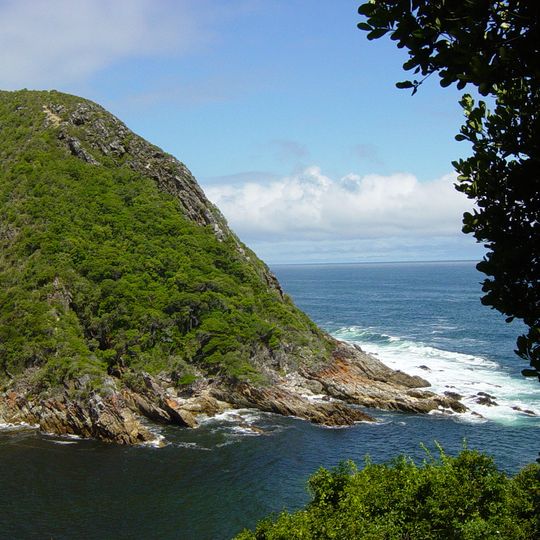
Tsitsikamma National Park is a protected area along the southern coast of South Africa in Eastern Cape, covering about 80 kilometers of rocky shoreline and extending 5 kilometers out into the Indian Ocean. The terrain shifts between steep cliffs, dark forests filled with ferns, and wide river mouths that cut through the rock on their way to the sea.
The area became a protected reserve in 1964 and was recognized as the first marine park in Africa, setting a new standard for coastal conservation. This decision helped preserve both land and ocean environments in a single system.
The name Tsitsikamma comes from Khoekhoe: tjisi means "ten" and ǁamma means "water", referring to the Tsitsikamma River; it is also rendered as "place of much water" or "waters begin". The Khoikhoi gave this name to the river and the area.
Two main camps at Storms River Mouth and Natures Valley serve as starting points for trails and water activities. Paths can be steep and slippery after rain, so wear sturdy shoes and bring enough drinking water.
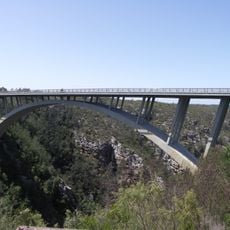
The Bloukrans Bridge lies near the park, not inside it, and carries the N2 highway over the Bloukrans River gorge. Its 216-metre (709 ft) bungee jump is described as the world's highest bridge bungee jump. The bridge is a separate stop from the Storms River Mouth camp.
The community of curious travelers
AroundUs brings together thousands of curated places, local tips, and hidden gems, enriched daily by 93,451 contributors worldwide.