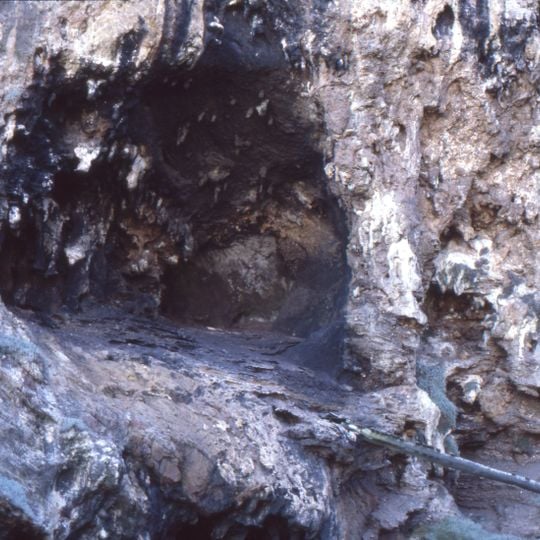
Klasies River Caves, Archaeological cave system in Eastern Cape, South Africa
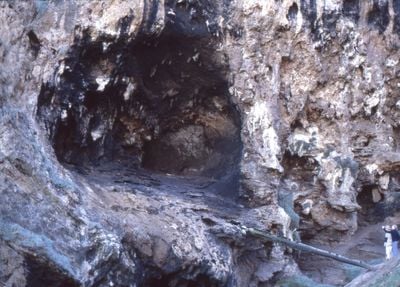
Klasies River Caves is a cave system on the Tsitsikamma coast in eastern South Africa, consisting of several connected chambers. The spaces are filled with thick layers of shell deposits and sediment that preserve traces of human settlement.
The system was first systematically explored in 1967, when archaeologists found stone tools and human remains over 100,000 years old. The excavations revealed how people inhabited this coastal area over extended periods.
Excavations found burnt and cut human bones among food waste, evidence of cannibalism at the site. Hearths show that people roasted plants, seals, penguins and antelope, and shellfish gathering left large shell middens. Stone blades made 70,000 years ago came from raw material carried about 20 km inland.
The five caves and two shelters lie in a sandstone cliff under a kilometre from the Klasies River mouth, reached on foot along the Tsitsikamma coast. The site is protected by the South African Heritage Resources Agency and the provincial environmental and tourism department, so access is controlled. Cave 2 only became reachable after sediments built up, and Cave 1B is poorly documented; most finds come from Caves 1 and 1A.
Excavations at the site have yielded more than 50 human remains, most from the 1967–68 work of Ronald Singer and John Wymer. Burnt and cut human bones found among food waste suggest that the cave's inhabitants practised cannibalism.
The community of curious travelers
AroundUs brings together thousands of curated places, local tips, and hidden gems, enriched daily by 93,687 contributors worldwide.