Madagascar spiny thickets, WWF ecoregion in southern Madagascar.
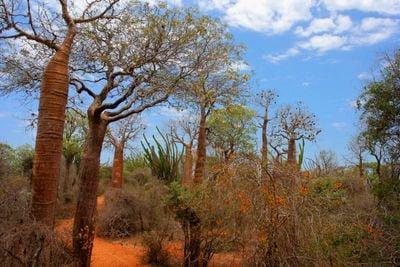
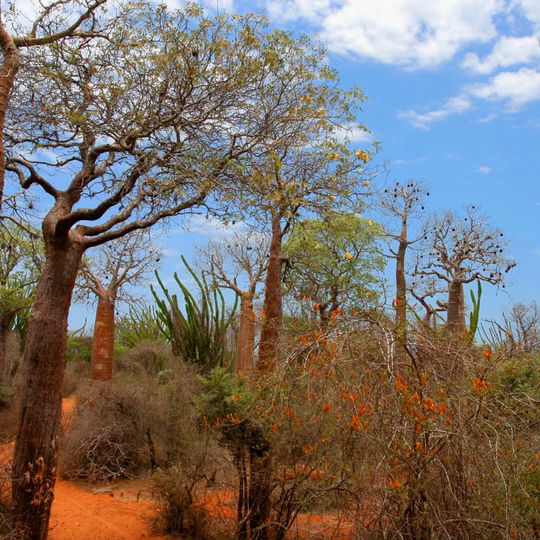
The Madagascar spiny thickets cover southern arid regions with scattered, thorny trees and thick shrubs adapted to dry conditions. These dense plant communities feature species with swollen trunks and reduced leaves as water-storage adaptations.
This landscape formed millions of years ago when Madagascar separated from Africa, allowing unique plant evolution in isolation. The geographic separation led to the development of plant families like Didiereaceae found nowhere else in the world.
Local communities have relied on these plants for healing and everyday needs, with knowledge passed through families over many generations. This relationship shapes how people understand and use the landscape today.
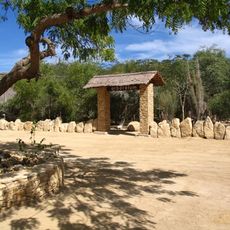
Access to protected areas within the region requires permits and advance planning with local guides. Plan visits during April through October when temperatures are cooler and exploration conditions are more favorable.
Some trees here store water in thickened trunks and have transformed leaves into thorns to reduce water loss. These extreme adaptations allow plants to survive the long dry periods common in this harsh region.
The community of curious travelers
AroundUs brings together thousands of curated places, local tips, and hidden gems, enriched daily by 60,000 contributors worldwide.