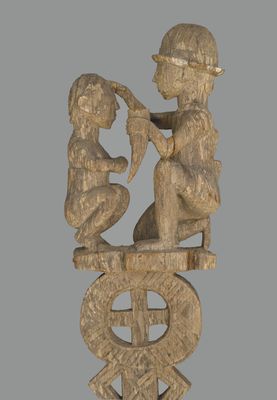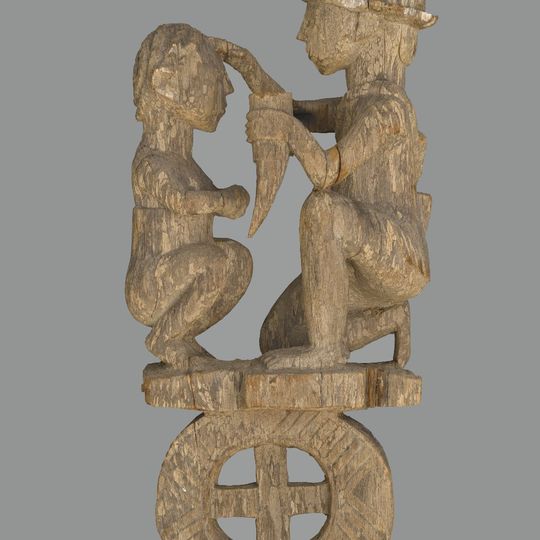
Aloalo, Funerary pole sculpture in southwestern Madagascar.
Aloalo are carved wooden posts erected on Mahafaly tombs and decorated with geometric patterns and symbolic figures. These artworks tell the life story of deceased individuals through their detailed carvings.
The tradition of aloalo sculptures originated in the Mahafaly region and was initially reserved for wealthy individuals. Over time this art form extended to more community members.
The word alo means "intermediary" or "messenger" in Malagasy, and the carved posts are meant to help the deceased join the community of ancestors. Mahafaly and Antandroy aloalo stand only on tombs, their number and the zebu horns around them depending on the dead person's wealth. Sakalava examples, notably in Menabe, are known for erotic imagery, unlike the older Mahafaly and Antandroy carvings.
Aloalo stand on tombs outside villages in the Mahafaly, Karimbola and Tandroy areas of southwestern Madagascar, chiefly the western part. Old aloalo were kept outside towns, but today they also appear in homes, hotel gardens and guesthouses, for example in Toliara. Ask locally before approaching a tomb, and expect to see aloalo in the art market rather than in archaeological museums.
Modern aloalo carvings integrate contemporary objects like bicycles and airplanes into their designs. These updates demonstrate how the art form has evolved while maintaining its traditional geometric patterns.
The community of curious travelers
AroundUs brings together thousands of curated places, local tips, and hidden gems, enriched daily by 93,180 contributors worldwide.