Zombitse-Vohibasia National Park, National park in southwestern Madagascar
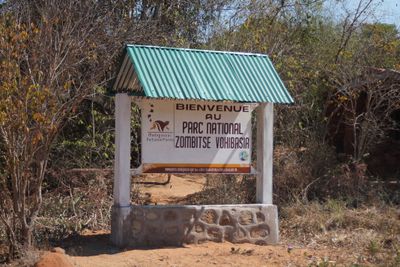
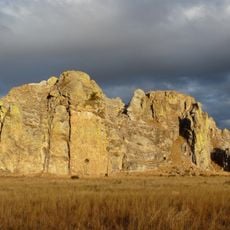
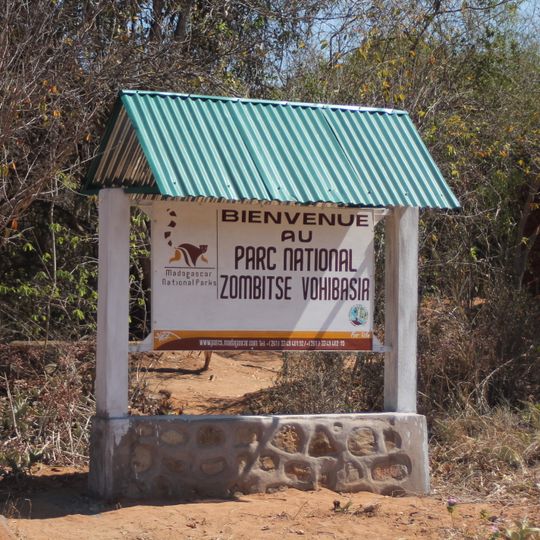
Zombitse-Vohibasia National Park consists of three non-contiguous forest parcels: Zombitse (16,845 ha) straddling National Road 7, Isoky-Vohimena (3,293 ha) between the two, and Vohibasia (16,170 ha) to the northwest. The Zombitse section lies on sandstone, the others on Jurassic limestone, between an 820 m calcareous plateau to the west and the Isalo massif 90 km east. At the park entrance, a sign with two grey pillars and a green corrugated roof reads "BIENVENUE AU PARC NATIONAL ZOMBITSE VOHIBASIA".
Botanical collecting by Perrier de la Bâthie in 1910 first documented the Zombitse forest, which was set aside as a protected area in 1962. The Vohibasia and Isoky-Vohimena forests were added in 1997, and the three parcels were formally established as a national park in 2002.
The Bara and Mahafaly are the main ethnic groups around the park; the French source also names the Tandroy. The park office sits at Sakaraha, about 10 km from the entrance, and the reserve is managed by Madagascar National Parks with part of its funding from the FAPBM.
The park lies 147 km north-east of Toliara along National Road 7, which crosses the Zombitse forest; the next town is Sakaraha, about 10 km from the entrance, where the park office is. The nearest airport is in Toliara. The rainy season runs from November to March, the dry season from April to October.
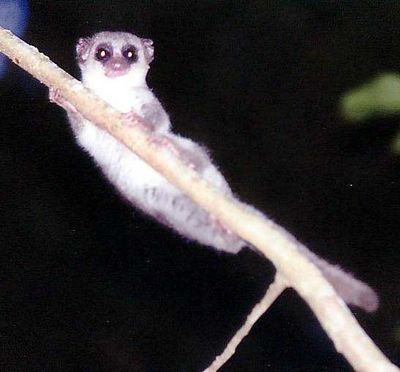
Hubbard's sportive lemur, also called the Zombitse sportive lemur, is known from no other protected area; its numbers are thought to be falling. The park also holds over 40 ant species in more than 20 genera, and two species of the endemic genus Oncodopus have been recorded here.
The community of curious travelers
AroundUs brings together thousands of curated places, local tips, and hidden gems, enriched daily by 94,407 contributors worldwide.