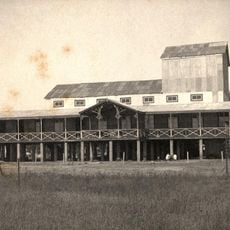
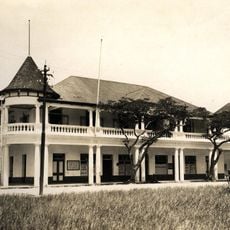
Fort São Caetano, Portuguese colonial fort in Buzi District, Mozambique.
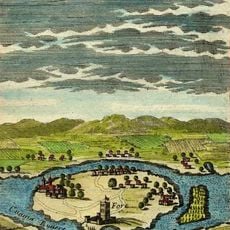
Fort São Caetano is a square stone fort begun in 1505 on Sofala Bay, first built of mangrove wood and rebuilt in stone in 1507. It had four round bastions at its corners, a two-storey keep, and a rainwater cistern inside the keep that supplied most of Sofala's drinking water.
Construction began on 25 September 1505, when Pêro de Anaia had a square wooden palisade and a surrounding ditch dug after an agreement with a local chief. Native attacks destroyed part of the stockade, and after Anaia's death in 1506 Manuel Fernandes rebuilt it in stone and lime brought from Kilwa, raising the keep. António de Saldanha added an outer barbican between 1509 and 1512.
Sofala was a Muslim trading post that, with Angoche, Mozambique and Kilwa, held a monopoly on gold from Manica and the Monomotapa kingdom, exchanged mainly at Sofala. The fort's church served as the parish church for all the people of Sofala, and its rainwater cistern supplied most of them, since the wells and river water were salty.
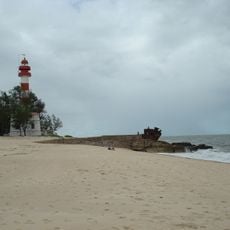
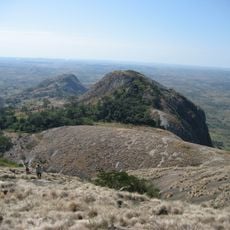
The fort stood on the Sofala coast, reached overland from the interior; the surrounding ground was cleared in 1505 to open a field of fire, and a moat 120 paces long on each side was dug around the wooden palisade. Erosion by the sea undermined the walls by 1758 and had destroyed one circular bastion by 1826, so the shoreline is the first thing to check when approaching the site.
The location on Sofala Bay made this place a junction for both sea trade and inland routes. This geographic position allowed inhabitants to keep watch over activities on the water and in the interior at the same time.
The community of curious travelers
AroundUs brings together thousands of curated places, local tips, and hidden gems, enriched daily by 94,036 contributors worldwide.