Sultan Mahmud Badaruddin II Museum, Colonial-era museum in Palembang, Indonesia.
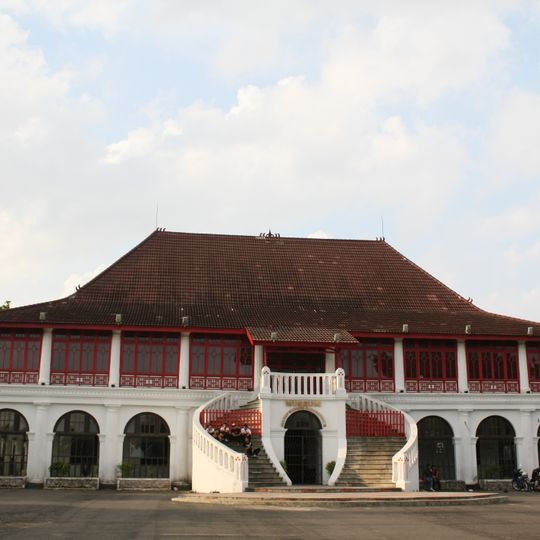
The Sultan Mahmud Badaruddin II Museum is a 19th-century building on the banks of the Musi River in Palembang, South Sumatra, Indonesia. It combines European and traditional Indonesian architectural features and houses collections that document the city's history through objects, textiles, weapons, and coins.
The museum occupies the site of Kuta Lama, the palace of Sultan Mahmud Badaruddin I (1724–1758). The British colonial government demolished the palace on 7 October 1823 after abolishing the Palembang Sultanate, following the massacre at the Dutch lodge Sungai Alur. A first building, Gedung Siput, was completed in 1824; the present two-storey stone building later served as the colonial resident's office from 1825.
The museum is named after Sultan Mahmud Badaruddin II, one of the most celebrated rulers of Palembang, known for resisting Dutch colonial rule. Inside, visitors can see traditional South Sumatran clothing, handcrafted weapons, and textiles that show how rich the region's craft traditions once were.
The museum sits right on the Musi River and is easy to reach on foot from central Palembang. Allow enough time to move through all the rooms, as the collections are spread across several areas of the building.
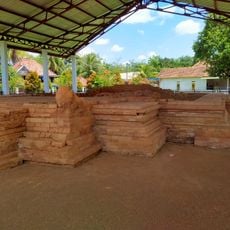
The museum garden displays stone statues of Hindu and Buddhist figures from the Srivijaya period, one of the most powerful kingdoms in Southeast Asia during the first millennium. These works were created when Palembang served as the political and religious center of a far-reaching maritime trading kingdom.
The community of curious travelers
AroundUs brings together thousands of curated places, local tips, and hidden gems, enriched daily by 93,612 contributors worldwide.