Penataran, Hindu temple complex in Blitar, Indonesia
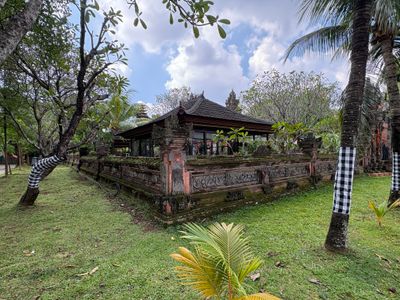
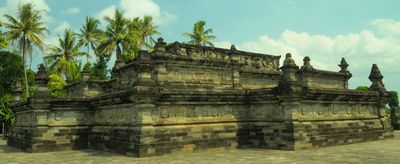
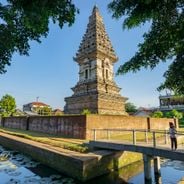
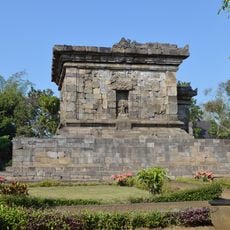
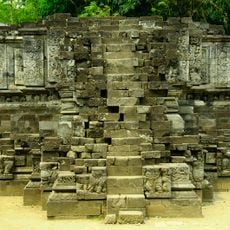
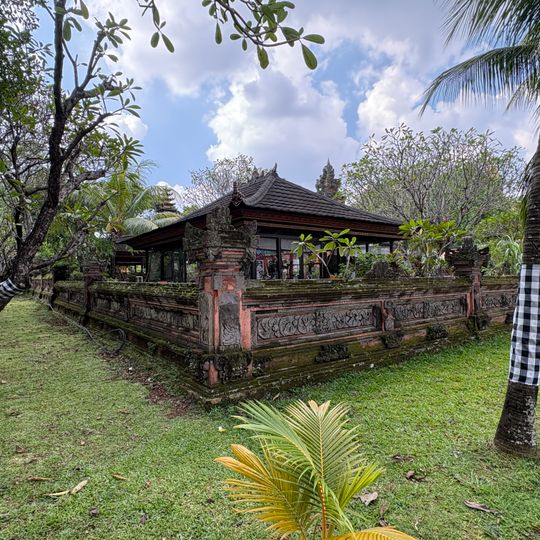
Penataran is a Hindu temple complex in Blitar, East Java, whose layout spans three terraced courtyards and includes several buildings made of volcanic stone. The walls and plinths carry stone reliefs depicting stories and figures, while open pavilions and shrines connect the different levels.
Construction started in 1197 during the Kediri era, and inscriptions link the site to King Srengga of Kadiri around 1200. The Dwarapala statues at the entrance carry the date 1232 Saka (1310 CE), when Palah was inaugurated as a state temple under Jayanegara of Majapahit. Building continued until the reign of Wikramawardhana around 1415, and the Nagarakretagama of 1365 records that Hayam Wuruk visited the sanctuary.
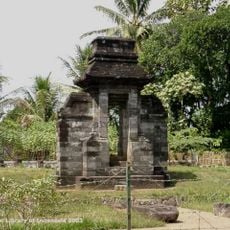
The Naga Temple is a small stone shrine in the second courtyard, named for the mythical snakes carved on it; the larger Bale Agung platform in the first courtyard is wrapped by a carved dragon-snake whose head emerges at the right and left sides. The Nagarakretagama of 1365 records Palah as a sanctuary visited by King Hayam Wuruk on his tour of East Java.
The complex is open from sunrise to sunset, and early morning offers cooler temperatures and fewer crowds for taking photographs. A sun hat and sturdy shoes are recommended, as the paths between courtyards can be uneven and shade is limited.
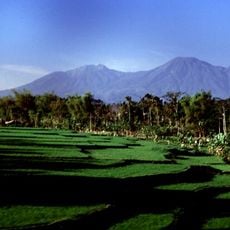
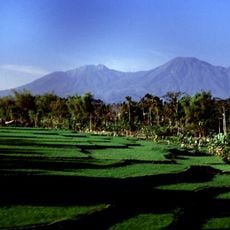
The complex sits on the southwestern slopes of Mount Kelud at around 450 meters above sea level, and this location makes it the largest Hindu temple site in East Java. Despite several volcanic eruptions nearby, the main stone structures have survived across centuries, demonstrating the resilience of the construction.
The community of curious travelers
AroundUs brings together thousands of curated places, local tips, and hidden gems, enriched daily by 92,672 contributors worldwide.