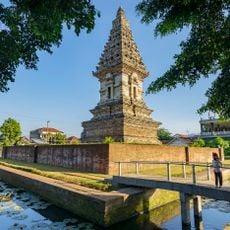
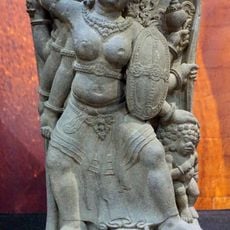
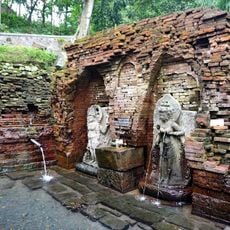
Gunung Gangsir, Hindu temple in Beji district, Pasuruan, Indonesia
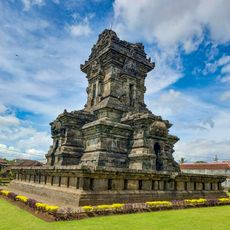
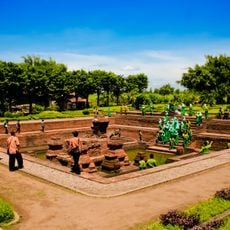
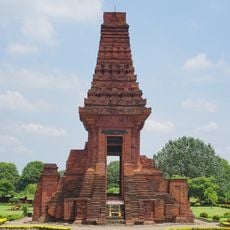
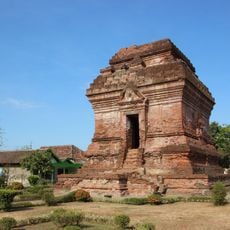
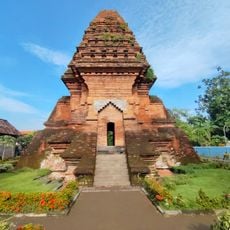
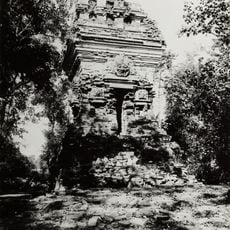
Gunung Gangsir is a Hindu temple in Beji district, near Pasuruan in East Java, Indonesia, built from red brick. The structure has a rectangular base with a stairway and a portal entrance on its eastern side.
No inscription or record names the temple's founder, deity or original name; locals long called it Keboncandi. Its proportions and decoration link it to Central Javanese temples such as Mendut, so experts date it to about the 11th century, during the reign of King Airlangga of Kahuripan. Marijke J. Klokke suggests it was restored late in the East Javanese period using material from an older temple.
Locals long called the ruin Keboncandi, after the hamlet of Kebon Candi. The name Gunung Gangsir comes from a story that someone once dug (nggangsir) into the mound to loot valuables inside. The temple's original name and the deity once worshipped there remain unknown, as no inscription has been found nearby.
The temple stands about 5 kilometres west of Bangil, in Gunung Gangsir village, Beji subdistrict, Pasuruan Regency. The stairway and portal face east-southeast, and the raised terrace about 5 metres above ground is reached by those steps. The upper roof stages and pinnacle are gone, so the ruin reads as a truncated pyramid.
Gunung Gangsir is the only temple in East Java where clay casting techniques were used to make its decorative elements. Traces of vajralepa plaster, a coating traditionally applied to protect and finish brick surfaces, are still visible on parts of the walls.
The community of curious travelers
AroundUs brings together thousands of curated places, local tips, and hidden gems, enriched daily by 94,004 contributors worldwide.