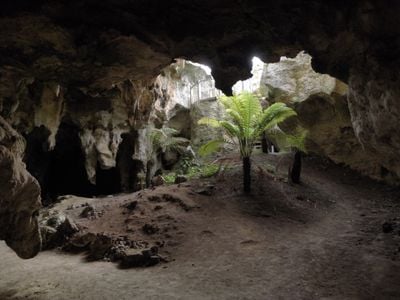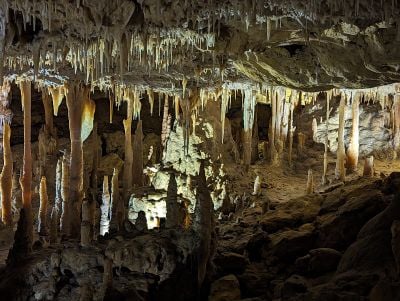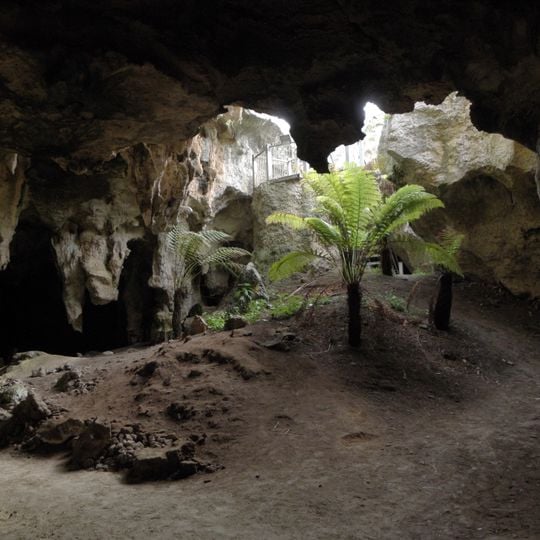
Naracoorte Caves National Park, UNESCO World Heritage caves in Limestone Coast, South Australia.
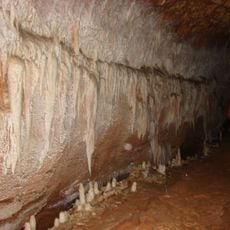
The national park contains 26 limestone caves within a protected area of 6 square kilometers, featuring extensive networks of underground chambers and formations.
The first discovery of these caves occurred in 1845 with Blanche Cave, leading to the establishment of a protected forest reserve by the Department of Woods in 1885.
The Victoria Fossil Cave contains over 500,000 years of preserved mammal remains, contributing to the understanding of Australian prehistoric megafauna species.
The park operates daily guided tours through five accessible caves, with the Victoria Fossil Cave tours scheduled at 10:15 AM and 2:15 PM for one-hour sessions.
The caves hold the largest known collection of Pleistocene vertebrate fossils in Australia, including specimens of extinct marsupials, such as Diprotodon and Thylacoleo.
Location: South Australia
Inception: 1994
Elevation above the sea: 70 m
Part of: Australian Fossil Mammal Sites (Riversleigh / Naracoorte)
GPS coordinates: -37.03611,140.79667
Latest update: May 13, 2025 04:43
Caves form through gradual geological processes that can span millions of years. Water dissolves limestone and creates underground chambers filled with stalactites and stalagmites, while ice caves in alpine regions maintain their frozen formations even during summer months. Each cave system tells a distinct story about the forces that shaped it, from chemical erosion to tectonic shifts that exposed new rock layers to underground rivers. This collection includes some of the most geologically significant caves on Earth. Carlsbad Caverns in New Mexico encompasses more than 30 miles (48 kilometers) of passages filled with mineral formations, while Mammoth Cave in Kentucky extends over 400 miles (650 kilometers) through limestone bedrock. Eisriesenwelt in Austria stretches 26 miles (42 kilometers) and contains ice structures that reform each winter. Reed Flute Cave in Guilin showcases limestone formations that began developing 180 million years ago. Waitomo Caves in New Zealand are home to thousands of glowworms that light the darkness with bioluminescence. Puerto Princesa in the Philippines features an underground river that flows 5 miles (8 kilometers) before reaching the sea. Several caves also preserve human history, including Lascaux in France with its 17,000-year-old paintings. These formations demonstrate how water, ice, and time create underground worlds that reveal both geological and cultural history.
Coonawarra
28.5 km
The Big Lobster
86.4 km
Mount Gambier
89.6 km
Mount Arapiles
97.7 km
Mount Schank
100.8 km
Little Desert National Park
80.1 km
Princess Margaret Rose Cave
107.5 km
Wannon Falls
116.7 km
Canunda National Park
89.3 km
Nigretta Falls
121.3 km
Lower Glenelg National Park
122.6 km
Cave Gardens
88.3 km
Cape Jaffa Lighthouse
87.4 km
Cape Banks lighthouse
102.9 km
Mary MacKillop Interpretive Centre
38.4 km
Cape Martin Lighthouse
85.9 km
Casterton railway station
81.3 km
Penguin Island Lighthouse
86.3 km
Australian Pinball Museum
110.3 km
Mary MacKillop Penola Centre
38.4 km
Horsham botanic gardens
130.5 km
Serviceton Historical Station
75.5 km
Robe Lighthouse
94.5 km
The Sheep's Back Museum
10.5 km
St Peter's church
112.5 km
Cape Northumberland Lighthouse
114.1 km
Kaniva railway station
83.5 km
Harrow Log Lock-up
72.2 kmReviews
Visited this place? Tap the stars to rate it and share your experience / photos with the community! Try now! You can cancel it anytime.
Discover hidden gems everywhere you go!
From secret cafés to breathtaking viewpoints, skip the crowded tourist spots and find places that match your style. Our app makes it easy with voice search, smart filtering, route optimization, and insider tips from travelers worldwide. Download now for the complete mobile experience.
A unique approach to discovering new places❞
— Le Figaro
All the places worth exploring❞
— France Info
A tailor-made excursion in just a few clicks❞
— 20 Minutes