South Para Reservoir, Reservoir near Williamstown, South Australia, Australia
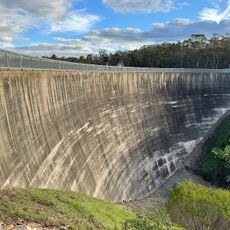
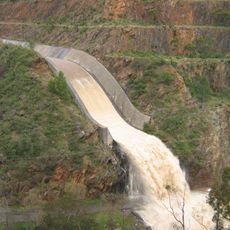
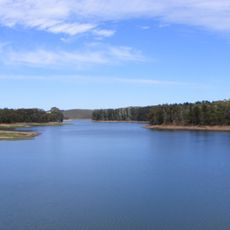
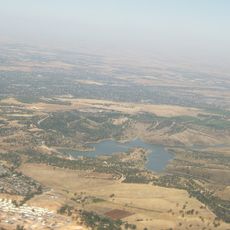
South Para Reservoir is an earth-filled embankment dam and reservoir on the South Para River near Williamstown, 38 km north-east of Adelaide. Its dam wall stands 48 m high and 284 m long; when full the reservoir holds 45.33 gigalitres and covers 444 hectares, fed by a 228 sq km catchment. An uncontrolled spillway and a downstream weir diverting water to the Barossa Reservoir are part of the structure.
Construction of the earth-filled dam ran from 1949 to 1958 and cost A$6.4 million, delayed by post-war demands on resources and by work on the Mannum–Adelaide pipeline from the River Murray. The reservoir was built to supply potable water to Adelaide. A 1998 SA Water safety review recommended raising the 48-metre wall by about 2.3 metres and lifting the spillway crest.
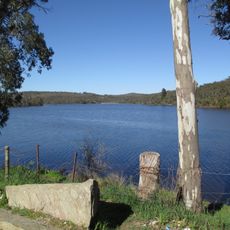
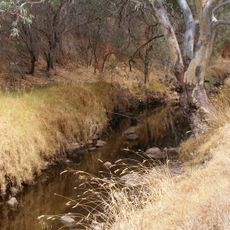
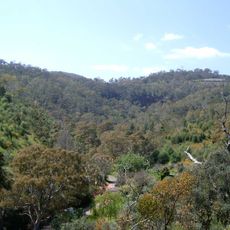
The reservoir's shore is bordered by a nature reserve where two revegetation efforts took place: more than 5,000 trees and shrubs were planted in the late 1950s, and later planting formed part of the South Australian Government's "Million Trees" initiative. The name comes from the South Para River, which the dam crosses near Williamstown.
The dam wall stands 48 metres high and 284 metres long, with an uncontrolled spillway; the reservoir fills to capacity only about once every five years. Water is diverted downstream from a weir through an underground tunnel to the Barossa Reservoir, then treated for Adelaide's northern suburbs. Access is near Williamstown, 38 kilometres north-east of Adelaide.
The reservoir's name recalls the 16-year-old Alan Barnes, whose body was found here on 24 June 1979; the case is one of five known as The Family Murders. A pathology report attributed his death to blood loss, and toxicology showed alcohol and sedatives.
The community of curious travelers
AroundUs brings together thousands of curated places, local tips, and hidden gems, enriched daily by 95,214 contributors worldwide.