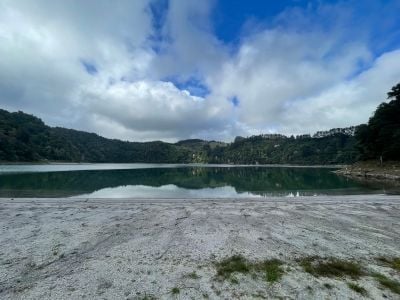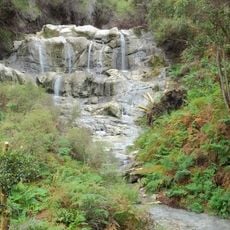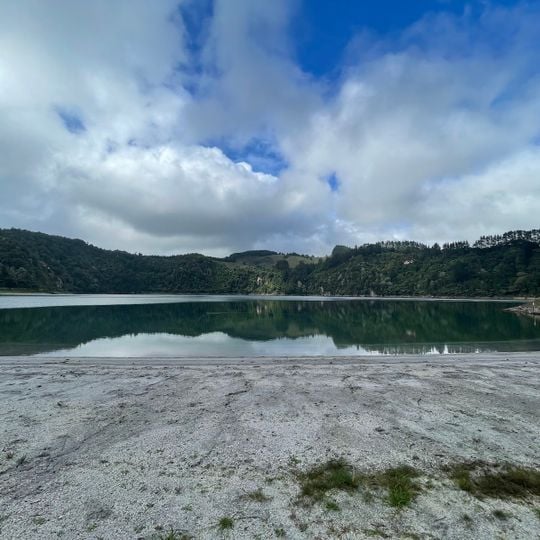
Lake Rotokawau, Maar lake in Bay of Plenty Region, New Zealand.
Lake Rotokawau is a maar lake about 4 km east of Lake Rotorua, roughly 920 m long and 710 m wide, with a circumference of some 2.8 km. Its average depth is 43.7 m and its maximum 74 m. The crater rim rises up to 90 m above the water, and the Waimata Stream enters from the south.
Lake Rotokawau is a maar formed by a basaltic eruption about 4,000 years ago, dated by tephra at 3440 ± 70 years before 1950. The eruption left a crater rim of up to 90 m and spread tephra over 70 km². It is one of only two recent basaltic fissure eruptions in a rhyolite-dominated area, the other being Mount Tarawera in 1886.
The lake is owned and managed by Ngāti Rangiteaorere, the local Māori hapū. Its name, Rotokawau, is shared with several other New Zealand lakes, including ones in the Kaipara District, the Chatham Islands and Waikato. Access is by Lake Rotokawau Road, reached from State Highway 30 at Tikitere, near Hell's Gate.
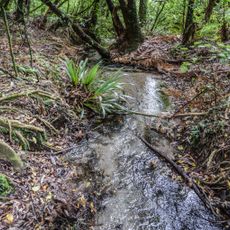
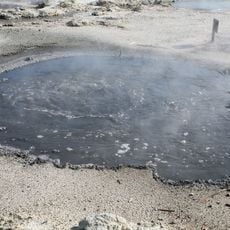
Access is via Lake Rotokawau Road, which leaves State Highway 30 at Tikitere, about 1.1 km northwest of the lake. The road passes near Hell's Gate. The lake has one main inflow, the Waimata Stream, entering from the south, and small geothermal springs on the northwest shore.
The lake is oligotrophic and holds koaro, banded kokopu, long-finned and short-finned eel, smelt and common bully. Its catchment is about 65% forested and 25% farmland, and small geothermal springs seep from the north-west shore.
The community of curious travelers
AroundUs brings together thousands of curated places, local tips, and hidden gems, enriched daily by 93,505 contributors worldwide.