Waimea House, historic site in New South Wales, Australia
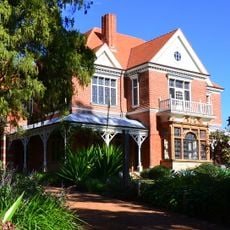
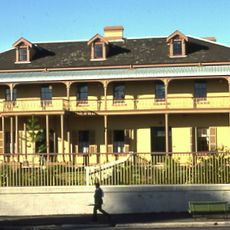
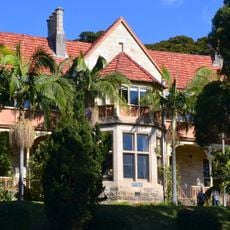
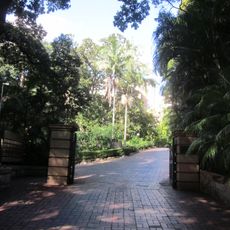
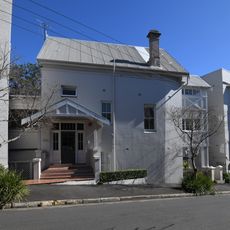
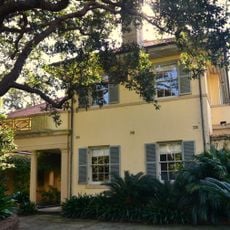
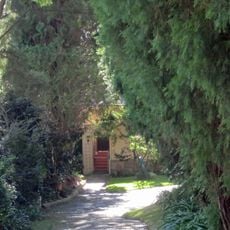
Waimea House is a two-story sandstone residence in Woollahra, built around 1858 in Georgian Revival style with a three-sided verandah supported by cast iron columns. The building is surrounded by mature Monterey cypress trees and maintained gardens that complement its simple architecture.
The land was originally granted to Captain John Piper in 1820, later acquired by merchant Daniel Cooper, and leased to Thomas Wheaton Bowden in 1856 who built the house. From 1949 to 1973 it operated as a hostel for blind women under the Royal Blind Society, and gained heritage protection in 1979.
The house served as a private residence and shapes the character of the Woollahra neighborhood today. Its sandstone walls and surrounding gardens create a connection between the building and local residential life that remains visible to visitors.
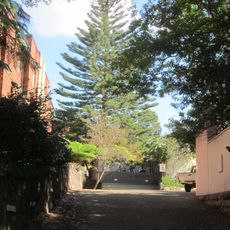
Waimea House is a privately owned residence on Waimea Avenue and is not open to the public, so visiting means viewing it from the street. The house closes the vista at the southern end of the avenue, framed by the Picturesque Gothic terraces at numbers 1-11 and 2-12, built around 1900. The garden wraps the west, north and east sides.
Between 1949 and 1973 the house was known as Helen Keller House and operated as a hostel for blind women, with Helen Keller herself laying the foundation stone for new buildings in 1948. This period made it a symbol of inclusion and community care long before modern accessibility movements.
The community of curious travelers
AroundUs brings together thousands of curated places, local tips, and hidden gems, enriched daily by 94,410 contributors worldwide.