Convict Lumber Yard, Convict industrial heritage site in Newcastle, Australia
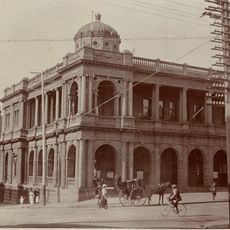
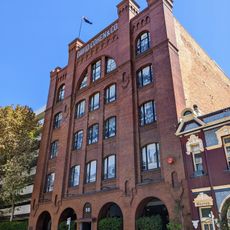
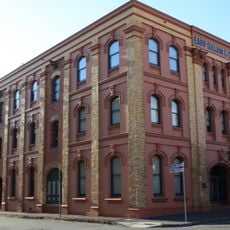
Convict Lumber Yard is an archaeological site at 98 Scott Street, Newcastle, where two intact railway buildings remain: the two-storey Paymaster's Office (1879, converted 1904) and the late Victorian Stationmaster's residence (1885). Excavations in 1987, 1989 and 1992 uncovered a brick drain and stone sump, a kiln floor, a well, and parts of the brick convict barrack (c. 1818).
Newcastle's first convict settlement was established on this site in 1801, starting the lumber yard. The penal settlement closed in 1822, but lumber work continued until the yard shut in 1831. It reopened in 1832 as 'The Stockade', housing convicts who built Nobby's breakwater; transportation to NSW ended in 1840 and the breakwater was finished in 1846. The Great Northern Railway opened in 1857 and a goods yard followed in 1858.
The name Scott Street recalls the yard's later railway era, when the station master's residence and the two-storey Paymaster's Office served NSW Railways staff. The 1987 excavation, carried out with community involvement, uncovered a well, a forge and brick paving, and the site is valued by Newcastle residents for that public archaeology.
The site is accessed through information provided at the Enterprise Park visitor facility, where printed materials and guidance are available. Walking the grounds in daylight allows you to see the excavated areas and building outlines clearly.
The 1987 excavations uncovered an Aboriginal open campsite, mainly stone tools, beneath the convict layers. The same dig found a brick drain and stone sump, a kiln floor, a well, and bricks from the collapsed convict hospital, plus part of the brick convict barrack built around 1818.
The community of curious travelers
AroundUs brings together thousands of curated places, local tips, and hidden gems, enriched daily by 94,216 contributors worldwide.