Oribin Studio, historic site in Queensland, Australia
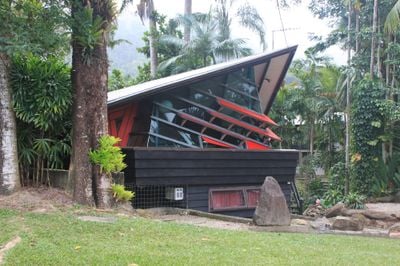
The Oribin Studio is a small building in Cairns, Queensland, designed in 1960 by architect Edwin Oribin as his personal working space. The studio features a diamond-shaped footprint with timber and concrete walls, large angled glass windows supported by round metal posts, and a sloped corrugated metal roof with deep overhangs for sun protection.
The studio was built in 1960 by Edwin Oribin, who grew up in Cairns and studied architecture after World War II. Oribin created the building as his personal working space and used it for 13 years before closing his architectural practice in 1973 and moving to a new home he designed in Edge Hill.
Eddie Oribin ran his architectural practice from this studio between 1960 and 1973, the year he closed it. He was known for meticulous detailing, structural creativity and control of light, and often made models and objects himself. The building sits on a lot he and his wife Joyce bought in late 1957, an irregular block with an acutely angled corner at Heavey and Mullins streets.
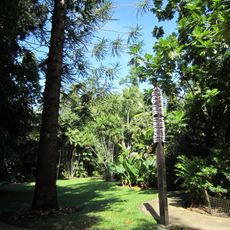
The studio is a small two-storey structure fronting Heavey Crescent, set among tropical vegetation with a creek running through the property; an easement protects the creek and cuts off the south-western corner. The site is an irregularly shaped lot with an acutely angled corner at the Heavey and Mullins streets intersection, which determined how the house and studio were sited and oriented.
The studio was influenced by Frank Lloyd Wright's organic architecture, particularly the Unitarian Meeting House with its prayer-hands-like form. Oribin adapted these international ideas to Cairns' tropical setting, creating an early example of how local architects in Queensland experimented with new forms using climate-appropriate materials.
The community of curious travelers
AroundUs brings together thousands of curated places, local tips, and hidden gems, enriched daily by 94,091 contributors worldwide.