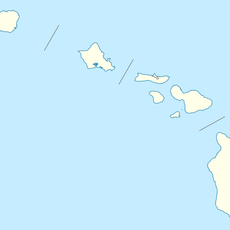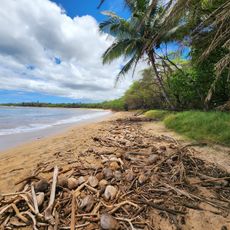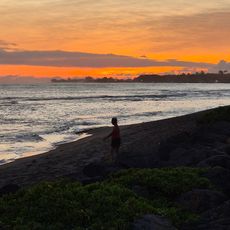
Russian Fort Elizabeth, Military fortress in Waimea, United States
Russian Fort Elizabeth is a stone fortress on the east bank of the Waimea River overlooking Waimea Bay, built in 1817 in the shape of an irregular octagon about 300 to 450 feet across. Its walls stand 20 feet high. The site is the last remaining Native Hawaiian fort, built by locals using an Italian-based design supplied by German traveler Georg Anton Schäffer.
Georg Anton Schäffer founded the fort in 1817 as a Russian-American Company initiative to establish a strategic base along Pacific trade routes. The site was eventually abandoned when Russian interests in the region faded.
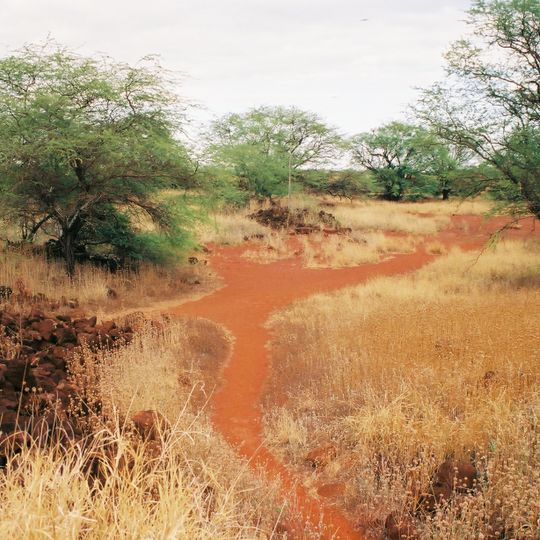
The fort's Hawaiian name is Pāʻulaʻula o Hipo, meaning "red enclosure of Hipo," and it was later used by the Kingdom of Hawaii as Fort Hipo. It housed Hawaii's first Orthodox Christian church, a small Russian Orthodox chapel. Visitors can follow an interpretive walking path with a self-guided brochure.
The site is reached through Fort Elizabeth State Historical Park with parking, restrooms, and walking paths that guide you around the perimeter. Morning or late afternoon visits work well, as lighting highlights the stone walls and details more clearly.
The fort was renamed Fort Hipo (Pāʻulaʻula o Hipo) and served the Kingdom of Hawaii after the Russians left; in 1864, while armaments were loaded onto a schooner for scrap, one or two cannons fell into Waimea Bay. The 1862 inventory listed 12 eighteen-pound cannons and 26 smaller guns.
The community of curious travelers
AroundUs brings together thousands of curated places, local tips, and hidden gems, enriched daily by 93,820 contributors worldwide.