Susitna Glacier, Mountain glacier in central Alaska, United States
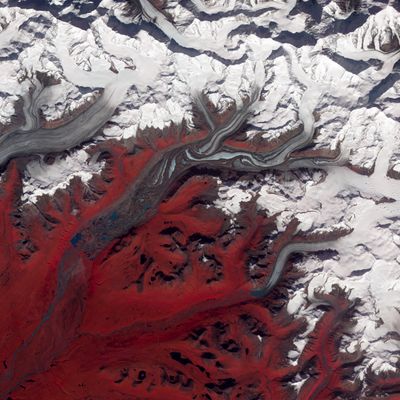
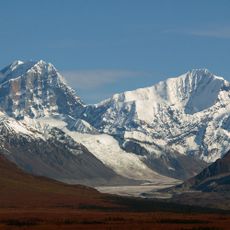
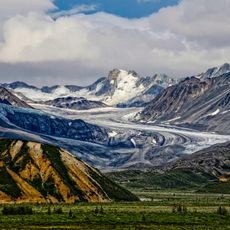
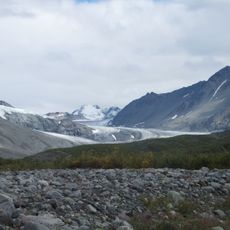
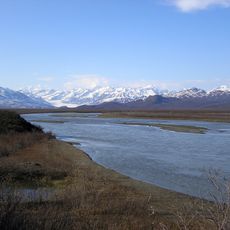
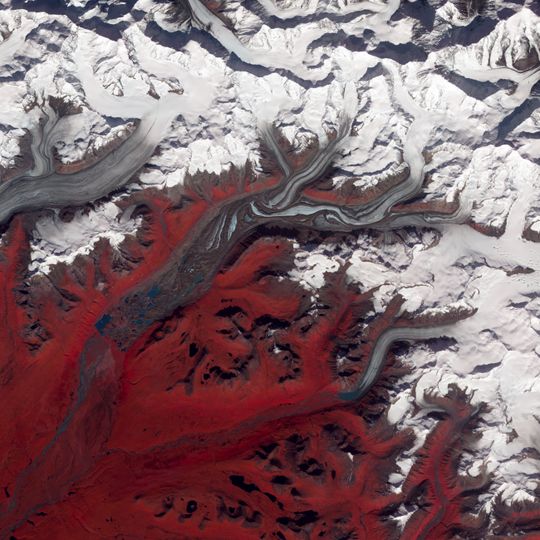
Susitna Glacier is a mountain glacier in the Alaska Range with a striking surface pattern of blue ice strips alternating with brown sediment-covered areas, creating marble-like formations across its face. The ice shows visible crevasses and flow lines that reveal how the glacier moves and changes over time.
The glacier sits in a tectonically active region where a powerful 7.9 magnitude earthquake in 2002 revealed previously unknown geological faults beneath the ice. This event helped scientists better understand the hidden geological structures that lie under the glacier.
Scientists from multiple research institutions monitor the glacier to understand climate patterns and geological movements in the Alaska Range mountains.
The best time to observe the glacier is during warmer months when access to the ice landscape is clearer and weather patterns are more stable. Visitors should prepare for alpine conditions since the location is remote and weather can change rapidly.
The glacier experiences periodic surge events where ice suddenly moves substantially faster than normal, driven by meltwater that accumulates beneath the surface. These rapid movement phases leave visible traces on the glacier surface and reveal the dynamic nature of the ice.
The community of curious travelers
AroundUs brings together thousands of curated places, local tips, and hidden gems, enriched daily by 91,021 contributors worldwide.