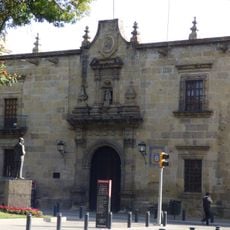
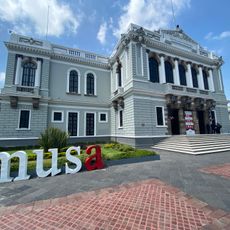
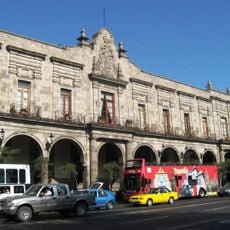
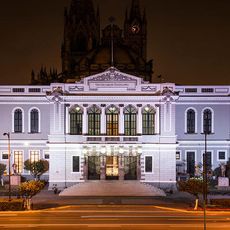
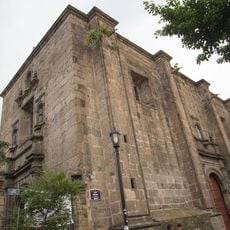
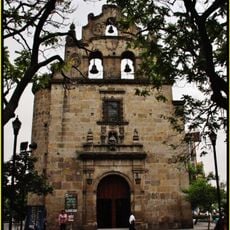
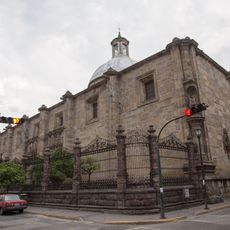
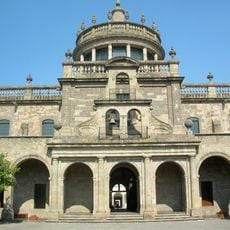
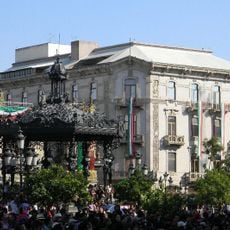
Palacio de Gobierno de Jalisco, Government building in Centro, Guadalajara, Mexico.
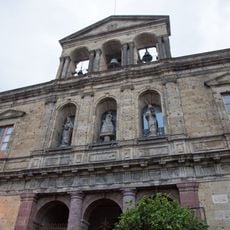
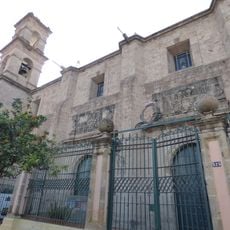
The Palacio de Gobierno de Jalisco is a two-story administrative building in downtown Guadalajara with a central courtyard surrounded by arches and a warm golden exterior. Its layout follows a classical colonial design, with stairs and corridors providing access to different levels and rooms.
A first adobe palace on land donated by architect Martín Casillas collapsed in the 1750 earthquake. The new building, begun in 1750 with golden quarry stone from the Huentitán ravine and funded partly by taxes on clandestine mezcal, opened in 1790 as the Palacio de la Real Audiencia. Hidalgo stayed here in 1810 and abolished slavery on 6 December; in 1858 Benito Juárez made it Mexico's national palace, saved from a firing squad by Guillermo Prieto's "los valientes no asesinan".
The building displays two large murals by José Clemente Orozco that portray Miguel Hidalgo and other key figures in Mexican history. These artworks shape the interior and tell stories of pivotal moments from the past.
The ground floor houses a multimedia museum presenting the history of Jalisco and Guadalajara through various exhibits and displays that offer insights into the region's past. The rooms are clearly marked, making it easy to navigate through the building.
On 30 January 1915, a Villista soldier under Colonel Jesús Medina fired from the Plaza de Armas at the clock tower, punching a hole between the V and VI numerals. The clock stopped until it was restored with a replica. The building also houses a museum opened on 18 May 2021, with eight permanent rooms on the building's history, its architecture and the maguey plant.
The community of curious travelers
AroundUs brings together thousands of curated places, local tips, and hidden gems, enriched daily by 92,811 contributors worldwide.