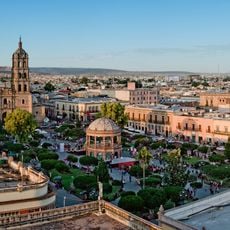
La Ferrería, Archaeological site near Durango, Mexico.
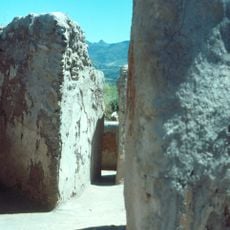
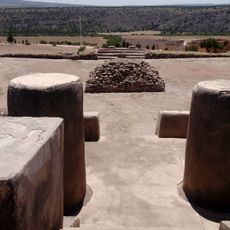
La Ferrería is an archaeological site on the Cerro de La Ferrería, about 7 km south of Durango city, beside the Tunal River. It has traces of at least two occupations: an earlier nomadic group and a later sedentary group that built the larger structures on the hill. Finds include circular ritual spaces, bird bones and stone rings.
The first inhabitants were Nahua nomads who arrived around 600 CE. From 600 to 1450 CE the site was occupied by Zacatecan and Tepehuano groups, and it was inhabited several times between 875 and 1450 CE. Alden Mason reported the site in 1948; Charles Kelley and University of Chicago students began excavations in 1952, defining an occupation of 800 to 1450 CE linked to the Chalchihuites culture, Guadiana branch.
La Ferrería was a meeting place for religious gatherings where pyramids, places of worship and houses were built. The site's circular ritual spaces, bird bones and stone rings point to ties with the American Southwest, especially Paquimé. A museum near the site, remodeled in 2007, displays artifacts found there.
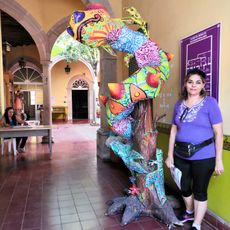
A museum at the site displays recovered artifacts and educational materials about the settlement's inhabitants and daily routines. The visitor center explains the layout and provides guidance for walking through the different areas and structures.
The site's finds include circular ritual spaces, bird bones and stone rings, which point to links with the American Southwest and especially with Paquimé. Researchers read this as a possible fusion of late northern Mesoamerican and Southwestern cultures.
The community of curious travelers
AroundUs brings together thousands of curated places, local tips, and hidden gems, enriched daily by 92,624 contributors worldwide.