Rose Bowl, Multi-purpose sports venue in Pasadena, United States
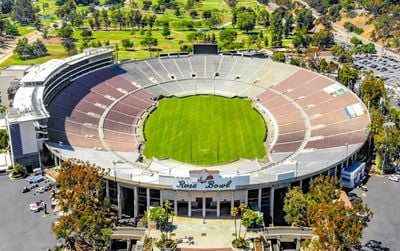
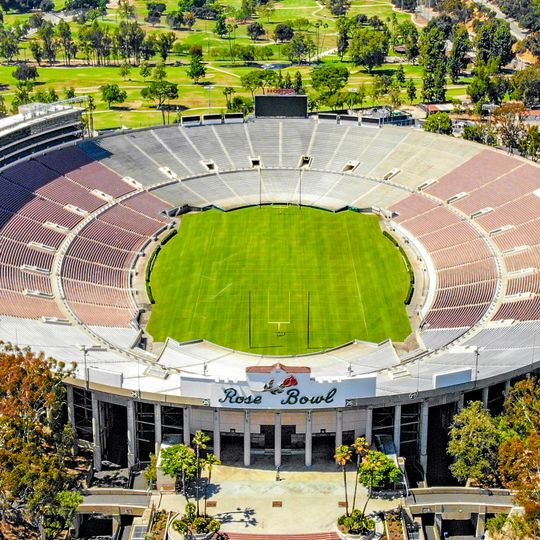
The Rose Bowl is an open-air stadium in Pasadena, California, built as a wide oval ring around a rectangular grass field. Tiered seating runs from a lower bowl of tan and brown seats through a broad gray middle band to a reddish-brown upper rim. White script lettering reading "Rose Bowl" with a small red rose emblem marks the facade, and trees stand directly outside the structure.
Designed by Myron Hunt in 1921 and modeled on Yale Bowl, the stadium was built from February 27 to October 1922. The first game, on October 28, 1922, saw California beat USC 12–0; the venue was dedicated on January 1, 1923, when USC defeated Penn State 14–3. The south stands were completed in 1928, closing the horseshoe into a full bowl.
The stadium's name was settled as "Rose Bowl" before the 1923 game, echoing the Yale Bowl. The Rose Bowl Game has been played here since 1923, and the UCLA Bruins have used it as their home field since 1982. The Pasadena Tournament of Roses Association organizes the annual game.
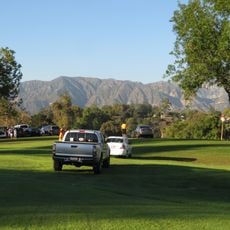
The venue offers ample parking and shuttle services that help manage the flow of visitors during major events. Clear signage and multiple entry points make it easier to navigate the large grounds despite the size of the crowds.
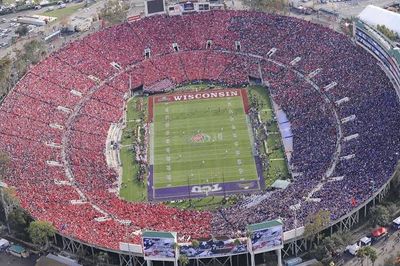
The Rose Bowl and Stockholm's Råsunda are the only stadiums to have hosted both a men's and a women's FIFA World Cup final: the 1994 men's final and the 1999 women's final. The stadium also held the cycling events of the 1932 Summer Olympics.
The community of curious travelers
AroundUs brings together thousands of curated places, local tips, and hidden gems, enriched daily by 92,612 contributors worldwide.