Salk Institute for Biological Studies, Research institute in La Jolla, United States.
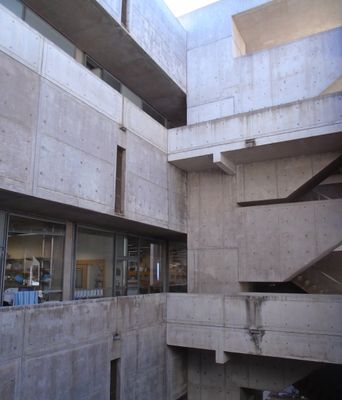
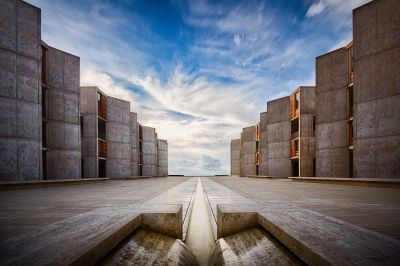
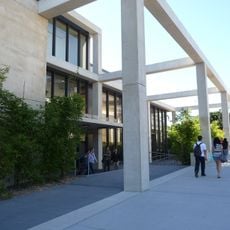
The Salk Institute for Biological Studies is a research facility in La Jolla, on the Pacific coast of California, consisting of two parallel concrete buildings with large glass panels. Both wings enclose an open courtyard with a narrow channel extending toward the sea, framing views over the ocean.
Jonas Salk, developer of the polio vaccine, sought land on the Torrey Pines Mesa in March 1960; a city referendum that June granted it, and the March of Dimes funded the start. Construction began in spring 1962, and researchers moved into the first laboratory in 1963. Louis Kahn designed the laboratory blocks; Anshen & Allen added further laboratories and administrative offices in the 1990s.
Jonas Salk named the institute himself; he wanted a place where scientists could work as he wished someone had invited him to. The campus was planned as a meeting point for science and the humanities, and Francis Crick held the J. W. Kieckhefer Distinguished Research Professor post there until his death in 2004. A golden engraving at the entrance reads: "Hope lies in dreams, in imagination and in the courage of those who dare to make dreams into reality."
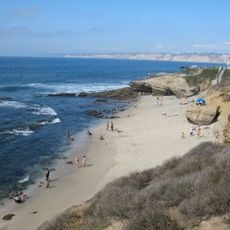
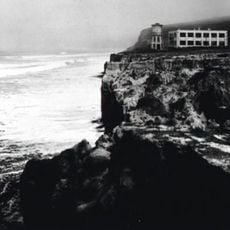
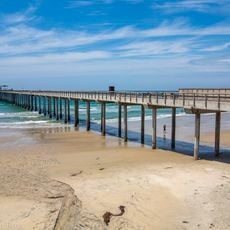
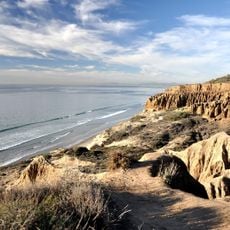
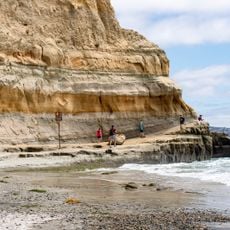
The facility sits on a cliff overlooking the Pacific, and visitors can orient themselves in the publicly accessible outdoor areas. The best time to visit is late afternoon, when light illuminates the concrete surfaces and views of the ocean become especially clear.
The two laboratory blocks were the only part of Louis Kahn's three-part campus plan ever built; the meeting and living quarters were never constructed. The travertine plaza between them was left unfinished on Kahn's instructions, and the thin central channel carries water toward the ocean view. The original buildings were designated a historical landmark in 1991.
The community of curious travelers
AroundUs brings together thousands of curated places, local tips, and hidden gems, enriched daily by 93,472 contributors worldwide.