Kinishba Ruins, Archaeological site in Canyon Day, Arizona, United States
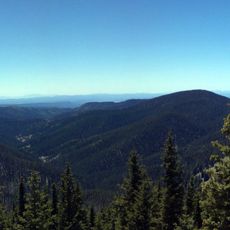
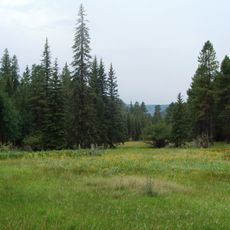
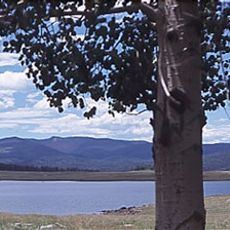
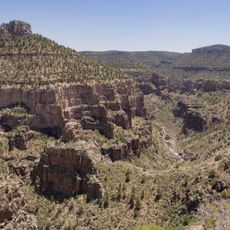
Kinishba Ruins is a 600-room Mogollon great house of nine masonry room-block mounds, some originally three stories tall, with two communal courtyards. It stands at about 5,000 feet above a pine-fringed alluvial valley at the eastern foot of Tsé Sizin, near Canyon Day on the Fort Apache Indian Reservation. Walls are double: one face finished, the other rubble.
Kinishba was built and occupied from the 12th to 14th centuries, part of a population boom in the Mogollon Rim region, and may have housed 1,000 to 1,500 people. Scholars link it to the pueblo Chiciticale named in accounts of Coronado's 1540–41 expedition. The Mogollon abandoned it in the late 14th or early 15th century, possibly after a water source dried up; the Apache who came later did not use the ruins.
The Apache name Kinishba comes from kįh łibáá, "brown house", as transcribed by Byron Cummings. Archaeologists link the site to both Hopi and Zuni ancestry because it combines Mogollon and Ancestral Puebloan traits. In the smaller courtyard stood an underground kiva for ceremonies; the larger courtyard shows three successive ceremonial stages, the last an above-ground room whose roof burned and was not replaced.
To visit, you must register at Nohwike' Bágowa Museum located nearby during weekday hours. Plan your visit in advance and allow time for the registration process before exploring the ruins.
Byron Cummings named the site from Apache words he transcribed as "kin lishba", meaning "brown house". His University of Arizona field school ran seasons there from 1931 to 1939, with a workforce of 10 to 27 White Mountain Apache assistants.
The community of curious travelers
AroundUs brings together thousands of curated places, local tips, and hidden gems, enriched daily by 93,883 contributors worldwide.