Otto Struve Telescope, Research telescope at McDonald Observatory, Davis Mountains, Texas
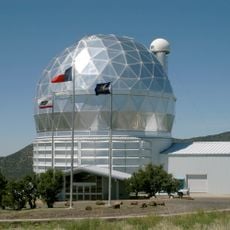
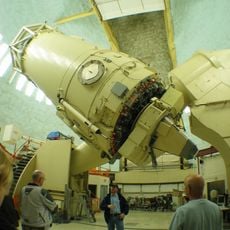
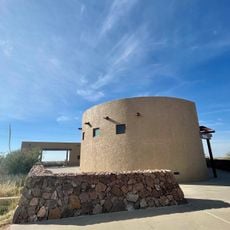
The Otto Struve Telescope is a research instrument at McDonald Observatory in the Davis Mountains of Texas, equipped with a 2.1-meter primary mirror made of borosilicate glass. It uses electronic detectors and computer controls to enable observations of galaxies, stars, planets, and distant cosmic objects.
Upon its completion in 1939, this telescope ranked as the second-largest optical instrument in the world, surpassed only by the Hooker Telescope at Mount Wilson Observatory. It represents a turning point in American optical astronomy during the early 20th century.
The name honours Otto Struve, director of McDonald Observatory from 1932 to 1950, not 1947; the telescope was dedicated to him in 1966, three years after his death. Struve was a Ukrainian-American astronomer of Baltic German origin. The instrument was one of two used to set up and define the Johnson-Morgan UBV photometric system.
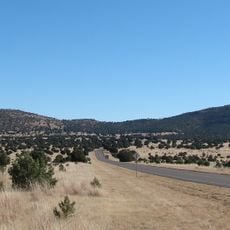
The telescope is located in a remote mountainous region, so visitors should expect longer travel times and limited nearby services. The best time to visit is during clear, dark skies, which favor its use for observations.
The 82-inch mirror was hauled from Fort Davis up Mount Locke by local trucker Carleton D. Wilson while residents cheered. In 1949 Gerard Kuiper of Yerkes Observatory found Neptune's moon Nereid on photographic plates taken with this telescope, and it was one of two instruments used to set up the Johnson-Morgan UBV photometric system.
The community of curious travelers
AroundUs brings together thousands of curated places, local tips, and hidden gems, enriched daily by 92,704 contributors worldwide.