Chinameca, Stratovolcano in San Miguel Department, El Salvador.
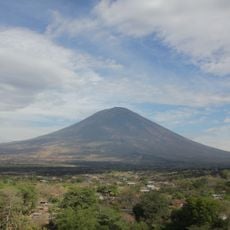
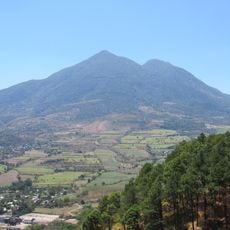
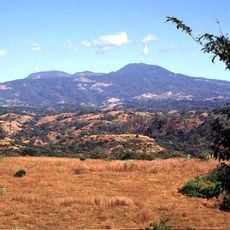
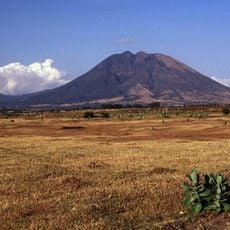
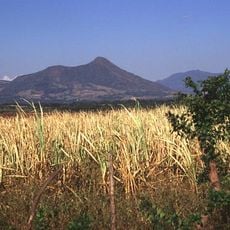
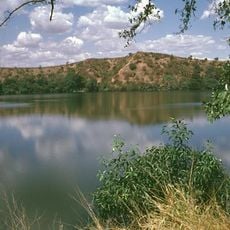
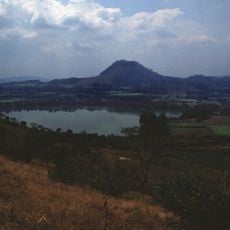
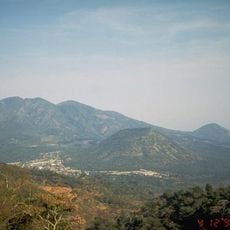
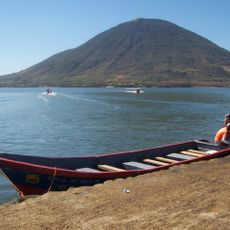
Volcan de Chinameca is a stratovolcano in San Miguel Department marked by a wide caldera at its summit. A smaller cone called Cerro el Limbo rises on the western side, creating a distinctive two-part profile.
About 59,000 years ago the old Chinameca edifice, then some 1,600 m high, collapsed in a supervolcanic eruption that ejected 132,000 of tephra and drained 77,000 of magma, leaving the 2 km-wide Laguna Seca el Pacayal caldera. A Plinian eruption around 50,000 years ago, the Pacayal eruption, sent an ash column 23 km up and threw out about 3.1 km³ of tephra. The last associated activity was the shallow earthquakes of 6 and 7 May 1951 near Jucuapa, of magnitudes 5.9, 5.5 and 6.2, which killed 400 to 1,000 people and left some 25,000 homeless.
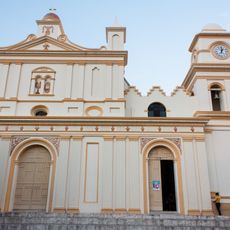
The volcano is also called El Pacayal, the name shared by the Laguna Seca el Pacayal caldera at its summit. The town of Chinameca sits below the mountain in San Miguel Department, and the 1951 earthquakes near Jucuapa on the northwest base, which left 400 to 1,000 dead and about 25,000 homeless, remain part of local memory.
Access to the volcano is through local roads that require careful navigation depending on conditions. Before planning a visit, it is best to check with regional authorities about current safety conditions and accessibility.
The caldera at the summit, Laguna Seca el Pacayal, is about 2 km wide, and the western satellite cone Cerro el Limbo rises higher than the caldera rim. Fumaroles on the north flank led to a geothermal exploration program on the mountain.
The community of curious travelers
AroundUs brings together thousands of curated places, local tips, and hidden gems, enriched daily by 92,695 contributors worldwide.