La Venta, Fossil locality in Tolima and Huila, Colombia
La Venta is a fossil locality in the Honda Group rocks of the departments of Tolima and Huila, Colombia. Its Middle Miocene Villavieja and La Victoria formations hold one of South America's richest Neogene fossil assemblages, the best-known Cenozoic site outside Argentina.
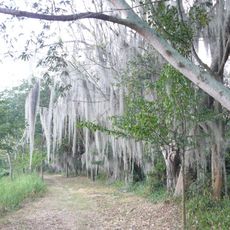
The fossils lie in Middle Miocene rocks of the Honda Group, split into the older La Victoria Formation and the younger Villavieja Formation. The animals lived 13.8 to 12 million years ago, an interval named the Laventan age after the site. The region was then wetter than today, with forests of trees related to the sapino, Goupia glabra.
The Laventan age of South American mammals is named after La Venta because of the site's paleontological importance. The fossil beds have yielded extinct relatives of living animals alongside wholly extinct lineages, among them the giant caiman Purussaurus neivensis, the saber-toothed marsupial Anachlysictis and the early anaconda Eunectes stirtoni.
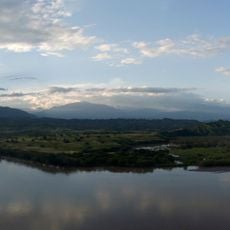
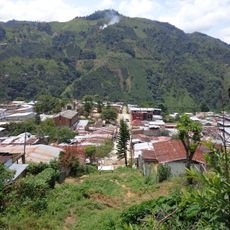
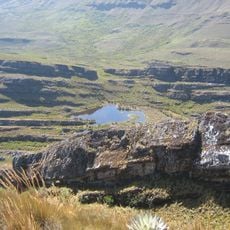
La Venta lies between the departments of Tolima and Huila, in the valley of the Magdalena River. The fossil beds are exposed in badlands around the village of Villavieja, reached by road from Neiva. Collecting and removing fossils is not permitted; the specimens are studied and kept in Colombian museum collections.
The Laventan age of the South American land mammal chronology is named after La Venta, reflecting the site's paleontological importance. Among the fossils found are the giant caiman Purussaurus neivensis and the saber-toothed marsupial Anachlysictis gracilis.
The community of curious travelers
AroundUs brings together thousands of curated places, local tips, and hidden gems, enriched daily by 92,787 contributors worldwide.