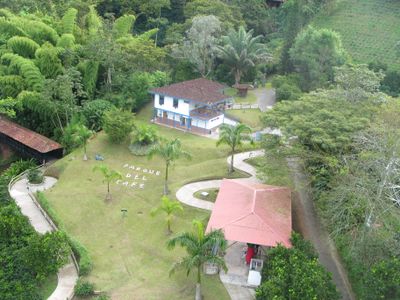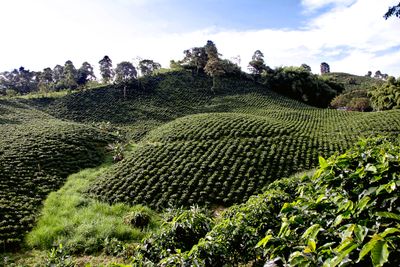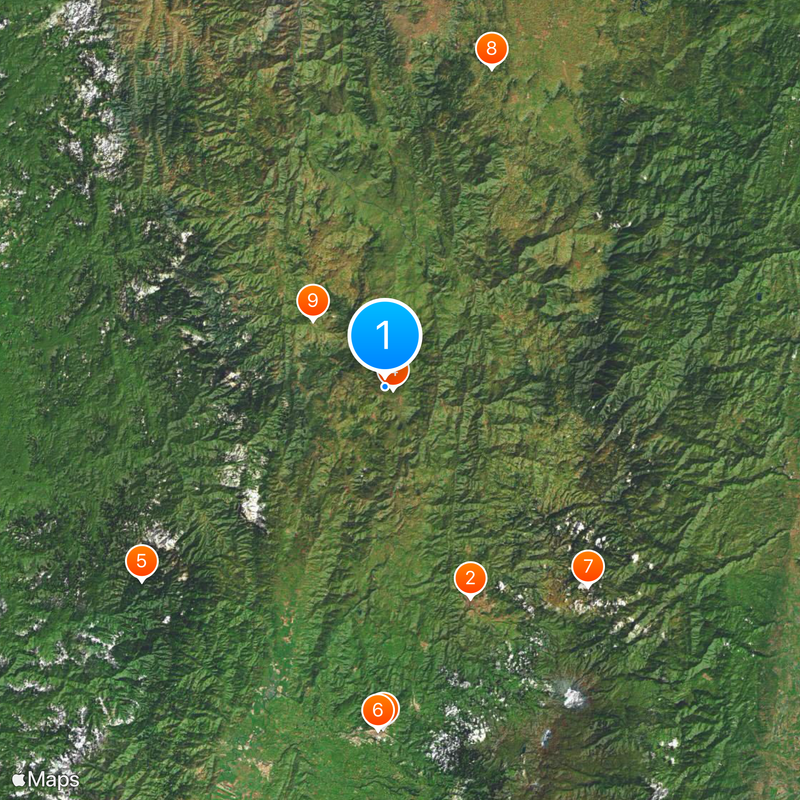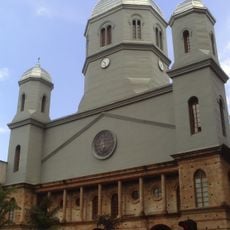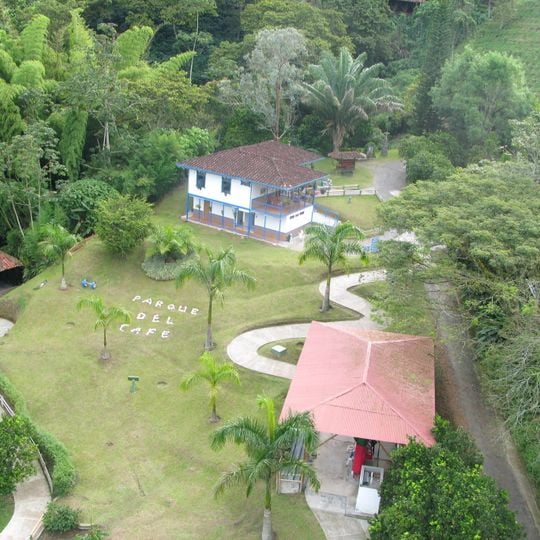
Colombian coffee growing axis, Coffee agricultural landscape in Paisa Region, Colombia.
The Coffee Cultural Landscape of Colombia is an agricultural region in the Paisa Region that spreads across steep Andean slopes in the western and central mountain ranges. The plantations follow the natural contours of the mountains, forming terraces where low coffee shrubs grow among taller shade trees.
Colonial settlers brought coffee seeds from the Caribbean to Colombia in the late 18th century and began planting them in mountain regions. During the 20th century, smallholder families developed the characteristic cultivation method on steep slopes that shapes the landscape today.
Coffee growers in this region rely on shade-grown cultivation, planting taller trees alongside the crops to protect them from intense sun and regulate soil moisture. Families often gather on drying patios to sort beans by hand, sharing the workload while neighbors exchange seeds and techniques across farm boundaries.
Visitors can join guided tours through active farms and follow the harvest steps from picking to drying the beans. Many farms offer overnight stays in traditional farmhouses with simple facilities and home-cooked meals.
The architecture of small towns and villages in this area uses bamboo trunks as load-bearing walls, plastered with clay and covered by movable roofs. This construction allows the roof to be lifted during heavy rain or wind to channel moisture away and protect the structure from damage.
The community of curious travelers
AroundUs brings together thousands of curated places, local tips, and hidden gems, enriched daily by 91,721 contributors worldwide.