Cerro Bravo, Stratovolcano in Tolima, Colombia
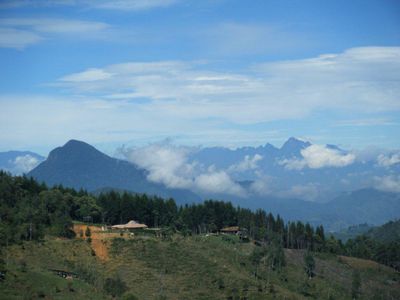
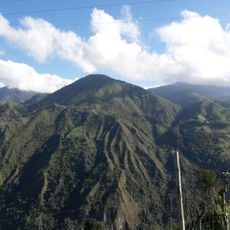
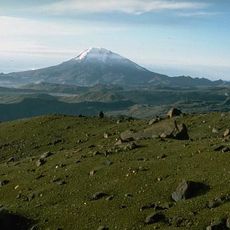
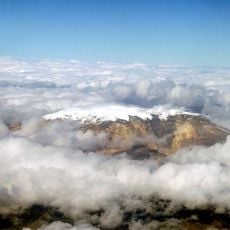
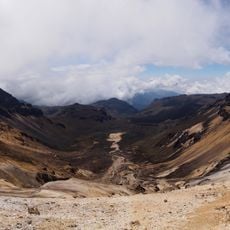
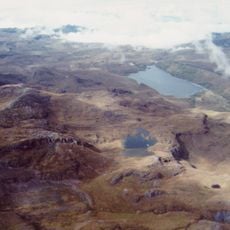
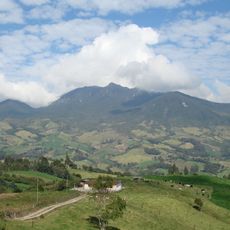
Cerro Bravo is a stratovolcano in Tolima, Colombia, north of Nevado del Ruiz and the highest point of the municipality of Herveo. Its rock is andesite, and its summit caldera measures 1 to 1.5 km in diameter. Unlike the snow-capped volcanoes farther south, its altitude leaves it without snow or glaciers.
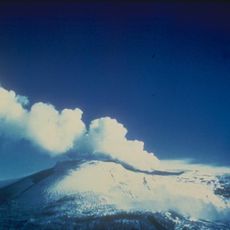
Cerro Bravo is a stratovolcano built of andesite in Tolima, the highest point of the municipality of Herveo, 144 km from Ibagué and north of Nevado del Ruiz. Radiocarbon dating of its deposits records lava-dome eruptions in its caldera around 1720, 1050 and 750 AD, and earlier central-vent eruptions followed by explosive phases around 1330 AD, 1310 BC, 1050 BC and 4280 BC.
Cerro Bravo is the highest point of Herveo municipality in Tolima, and its name is used locally to refer to the mountain that dominates the horizon north of the Nevado del Ruiz. The volcano lies about 144 km from Ibagué, the departmental capital, and its andesite rock is the reference material for the area's volcanic terrain.
Cerro Bravo lies in the Cordillera Central of Tolima, in the municipality of Herveo, about 144 km from Ibagué, north of the Nevado del Ruiz. Unlike Ruiz, its summit carries no snow or glaciers because of its lower altitude. Access is by road from Herveo; the summit caldera measures 1 to 1.5 km across.
Cerro Bravo is the highest point of Herveo municipality, 144 km from Ibagué. Unlike the Nevado del Ruiz to its south, its altitude leaves it without snow or glaciers, yet its andesite eruptions built lava domes inside a caldera 1 to 1.5 km across, dated by radiocarbon to around 1720, 1050 and 750 AD.
The community of curious travelers
AroundUs brings together thousands of curated places, local tips, and hidden gems, enriched daily by 93,784 contributors worldwide.